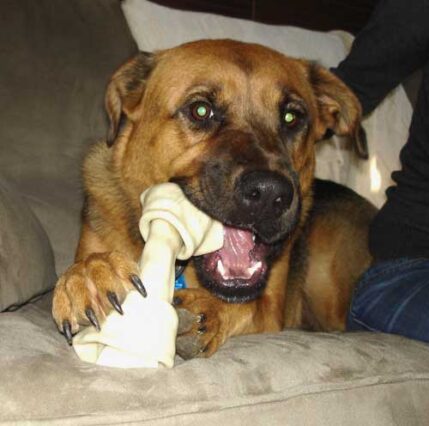
Rawhide bones and dog chews are made from the skin of cows.
Rawhide is an inexpensive treat for dogs, and many people keep a stock of these on hand for their pets. However, controversy has been brewing over the safety of rawhide treats for dogs.
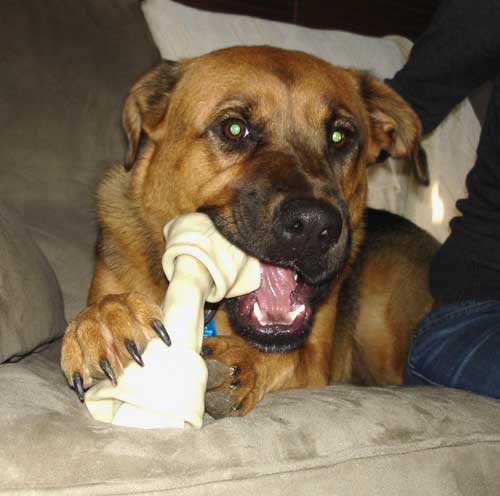
Downsides Of Rawhide Chews
There are several prospective problems with rawhide.
First, rawhide can be a choking hazard as dogs can break off small pieces of the rawhide as they chew it.
Second, rawhide can cause stomach irritation in dogs, or even a gastric disorder from ingesting rawhide too often.
Due to the fact that the manufacturing of rawhide chews and bones is unregulated, there is little control as to how safe they are for your pet. There have been reports of salmonella causing many dogs to get sick, in addition to dangerous chemicals being used when processing these rawhide dog chew.
One example: Two dogs struggle with the after effect of bad rawhide.
Reasons To Try Rawhide Chews
Many people give their dogs rawhide chews regularly without ever experiencing any trouble at all.
Rawhide bones are used to improve the condition of a dog’s gums and teeth. This is the equivalent of eating apples for humans.
Another major benefit of rawhide for dogs is that it keeps an active dog from chewing furniture and damaging the home. Instead, the dog has something else to do: chew on rawhide bones for awhile.
Safety Precautions
 As you can see, an argument could be made both for, and against, the use of rawhide chews.
In the end, the chance of getting salmonella is probably the same as you or me contracting it at a county fair. And chewing on rawhide does help to keep your furniture intact and your dog’s teeth and gums reasonably clean.
If you are going to give your dog rawhide bones to chew on, you need to be a bit discriminating on where you buy them from. For example, BeefChew.com makes rawhide chews that are naturally processed, have no preservatives, no salt and no liquid smoke added.
The most important thing is to supervise your dog any time he is chewing on rawhide. And make a point to take away the rawhide chew when it gets small and looks like something your dog could choke on.
If your dog gets an upset stomach after eating a rawhide dog chew, take away the rawhide chews temporarily to see if his upset stomach gets better. If so, you may only want to experiment one more time with a rawhide chew. If your dog gets an upset stomach again, your dog should is sensitive and should not be given rawhide to chew on. Ask your veterinarian to be sure.
More About Rawhide Dog Bones

I have been a certified tightwad since I became pregnant with my first child and decided to find a way to stay home with him. I enjoy sharing my experiences in my journey back to financial health and planning for a future — which will include sending 2 kids to college and early retirement.