TPLO Surgery For Dogs That Have A Torn ACL

Last month, on a warm sunny day, Jim & I had just returned home from a trip to Canada.

We picked up our dog at the pet sitters, then we all played at home in the backyard together. Tenor was soooo happy to see us. It had been a week — about the longest he’d been away from us.

Suddenly, he got this urge to just start running… HARD!

Tenor was running laps from corner to corner — the entire perimeter of our fence line. When all of a sudden, as he was running and turning the corner, he yelped and fell down. His knee gave out. That was the start of Tenor’s 3-legged mobility.


Our Dog Tore His ACL

We immediately called our vet, who said to put him on the Deramaxx pain killers we had leftover from the last time he pulled his leg muscle.  If it continued for more than a week, he wanted us to bring Tenor in for x-rays.

It continued. The meds didn’t help much. Tenor wouldn’t put any weight on that back right leg at all. When we took him to the vet for x-rays, it was obvious that he’d torn his ACL.
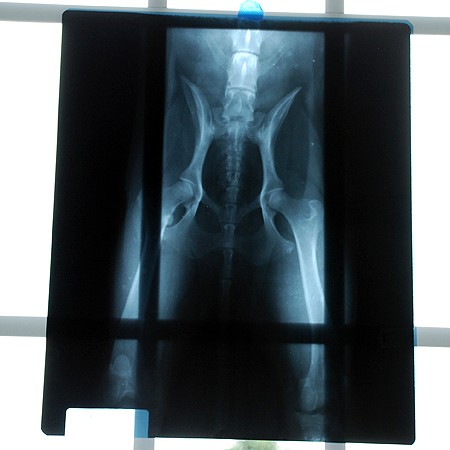
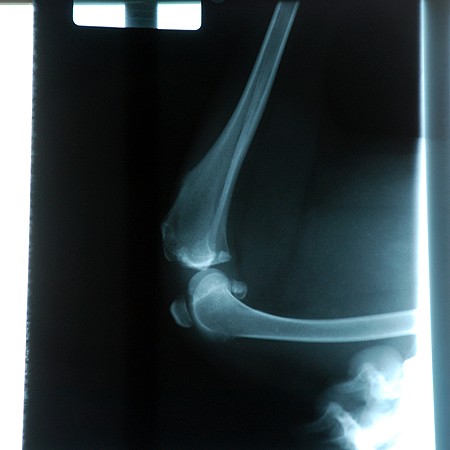
tenor-dog-hip-and-knee-xray.jpg  tenor-dog-leg-and-knee-xray.jpg


Here’s a great explanation: What Is An ACL?


In people, injury to the ACL (anterior cruciate ligament) is usually a traumatic injury. You know, the tennis ball goes one direction and your knee goes the other. In dogs, ACL injury is usually a degenerative injury. The difference is subtle but important. In people, the ligament is often normal and is injured by the trauma. In dogs, the ligament is abnormal, and although the lameness is often proceeded by a perceived trauma, most often this ligament was going to pop sooner or later. The implication of this distinction is that the other ligament is often bad as well. So dogs with an injury to one ACL are at a much higher risk of tearing the ligament in the other knee.  Source


The vet said Tenor had about an inch or so of free-range motion in that knee — in a direction that he was supposed to have NONE. (More proof that the ligament was torn.)
dr-sam-beckman-dvm.jpgSo we scheduled our initial pre-op visit with the veterinary surgeon who comes highly recommended in these parts: Dr. Samuel Beckman with Affiliated Veterinary Specialists (now Blue Pearl Veterinary Partners) here in Nashville. (They’re also the doctors associated with the after-hours emergency care center.)
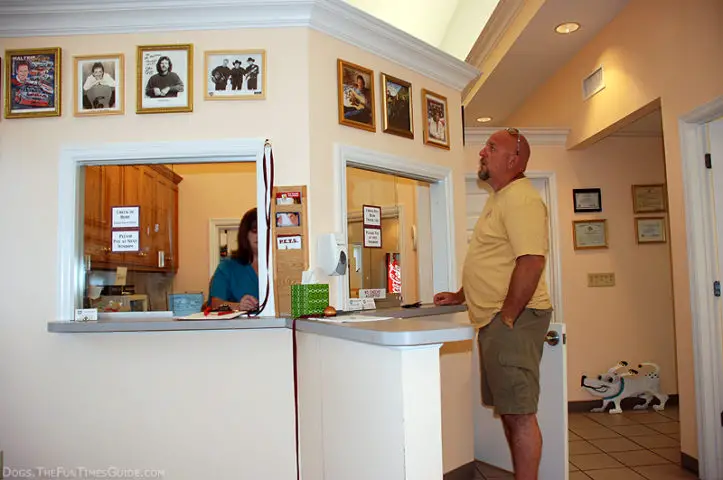

darrell-waltrip-and-other-celebs-on-vet-wall.jpg  randy-travis-rascall-flatts-billy-ray-cyrus-dog-vet.jpg


So we took our vet’s x-rays to the surgeon (Dr. Beckman), who also did a visual exam of Tenor and agreed the TPLO surgery was necessary.

By the way, while examining Tenor’s x-rays (one set included his hips), Dr. Beckman said that Tenor will never have a problem with his hips — they look REALLY good. Whew! some good news for a change! A hip problem is one thing you always wonder about dogs — especially large dogs.

Dr. Beckman also spent a good deal of time explaining to us the parts of a dog’s knee, how the knee and ACL work in dogs — including ways that they’re similar and ways that they’re different from a human’s ACL and a human’s knee, the options for this type of injury, and what to expect in terms of the surgery and recuperation period.
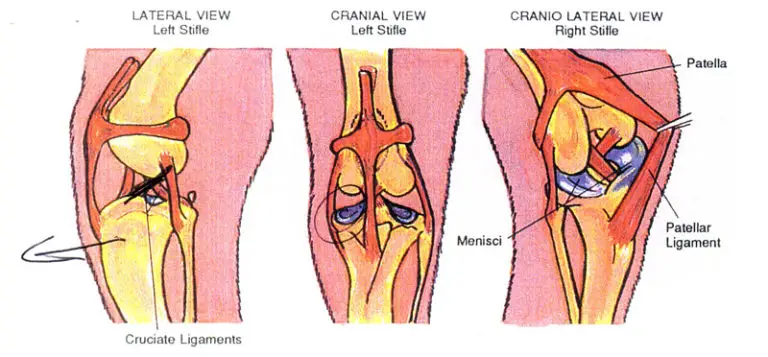
a-dogs-acl-torn-ligament.jpg


How Much Does TPLO Surgery Cost?

I’ve heard that dog TPLO surgery can run anywhere from $2,500 to $5,000.

In fact, Trupa
nion Pet Insurance puts the average cost at $5,439 for a Cruciate Ligament Tear, which covers surgery to repair a torn right hind ACL and any post-op complications.

We were given a ballpark figure ranging from $2,647 to $2,806 for the surgery & meds. (The variation was based on how much medication Tenor would ultimately need.)

In the end, we walked out with a bill of $2,541. Tenor didn’t need much medication. And he didn’t have any post-op complications.

For the record, we had to pay 80% up front (on a credit card) before the surgery even took place. They don’t take any chances with non-paid bills for high-dollar surgeries these days. Which I completely understand. (And no, we didn’t have pet insurance.)

The bigger parts of the itemized TPLO surgery included:

  • Anesthesia (Tenor weighs 75 lbs) $375

  • ACL repair – TPLO on a large dog $650 (this was the cost for the labor alone)

  • ACL parts – 1 metal plate $210 and 6 screws $126

  • 2-night stay requiring 24-hour nursing care, level 3 $156

  • 2-night hospitalization standard (walks & feeding?) $50

  • X-rays (yes, even though our vet had taken x-rays, the surgeon required his own set of x-rays as well — one set prior to surgery and another set immediately after surgery. AND we have to go back in 6 months for a follow-up visit to make sure everything is healing properly, which is where he’ll compare with the earlier sets) $196

The remaining balance included all of the many meds, bloodwork, IV’s, surgical prep, operating room, bandages, e-collar etc.
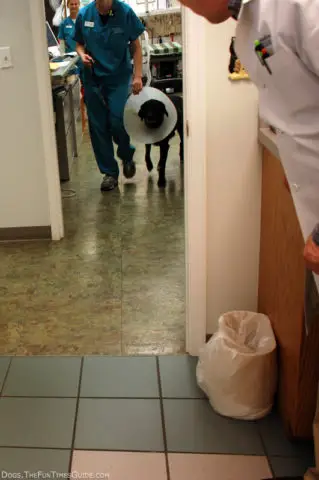
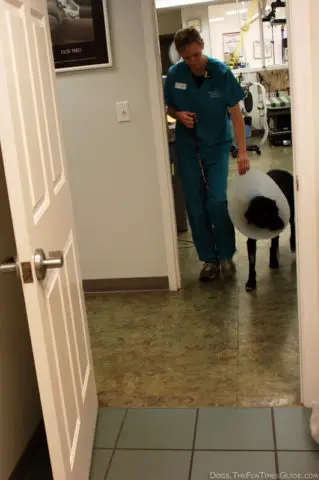
dr-sam-beckman-tenor-dog.jpg  nurse-amy-bringing-tenor-with-ecollar.jpg

Tenor’s surgery took place exactly one month to the day that he tore his ACL running in our backyard. (He is 7 days post-op as I write this.)

By the way, we consulted with 3 separate veterinarians prior to scheduling the surgery, regarding whether or not there were other options instead of the TPLO surgery to repair Tenor’s knee. But, because he’s such a large dog, each recommended the surgery.  And each told us the going rate was between $2,500 and $3,000 for TPLO surgery. (Other reports support this figure.)

What if you cannot afford the surgery for your dog?


TPLO Surgery For Dogs With Torn ACLs
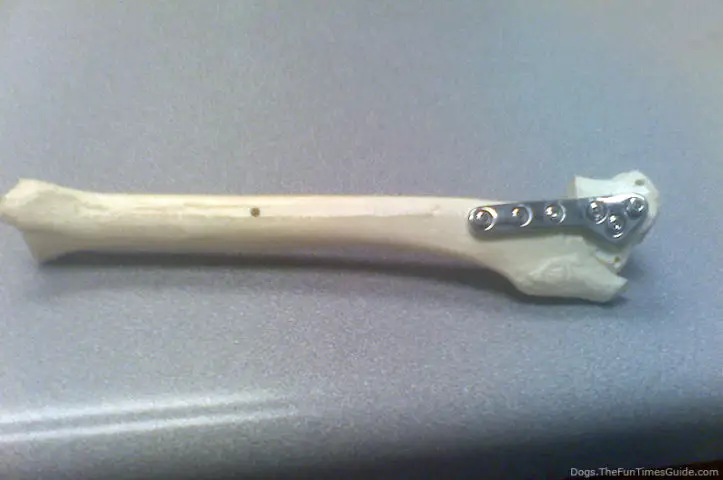
bone-screws-dog-tplo.jpgHere are some of the interesting things I learned about a dog’s ACL and TPLO surgery:

Dr. Beckman said that TPLO surgeries are incredibly common in most full-breed Labradors, though a mixed-breed Labrador generally doesn’t have as high chances of inheriting the weak ACL as full-breed Labs do. Tenor was the exception to this rule. (He’s part Labrador Retriever, part Great Pyrenees.)
 

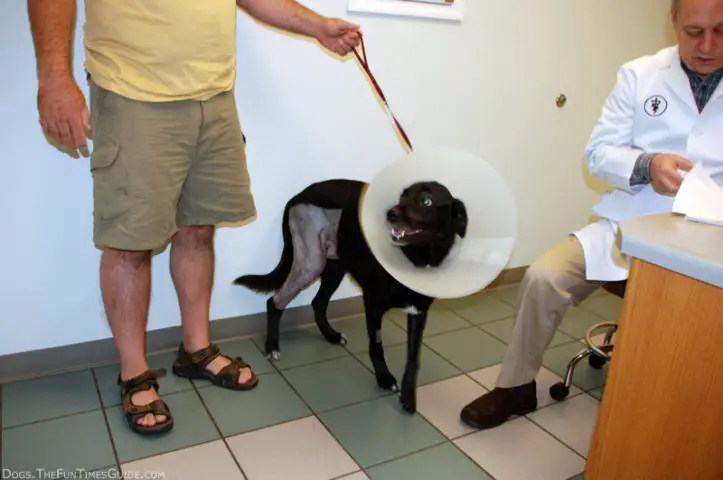
dr-sam-beckman-tenor-dog-with-ecollar.jpg Dr. Beckman does roughly 100 TPLO surgeries on dogs each year. He did 2 others on the same day he did Tenor’s.


When a dog tears his ACL, basically you can either do nothing or have the surgery. There’s not a lot of middle ground with things you can try along the way. Of course, you’ll have your dog owners who swear by natural medicine and holistic care, including vitamins, natural foods, and supplements — which may work for some. But for the most part, the larger the dog, the more the TPLO surgery is pretty much the only way to go.


I was told (by all 3 veterinarians we met with) that it’s not as imperative as you might think to rush a dog into surgery right after you notice the limp from a torn ACL. It won’t "heal wrong" or anything. And dogs (including Tenor) can function quite well on 3 legs in the meantime. The biggest difference is… the longer you wait to have the surgery, the more pronounced the arthritis will likely be as your dog ages. Arthritis in dogs who’ve had torn ACLs is pretty much inevitable. It’s just the degree to which that arthritis sets in that differs in dogs — and it’s based on a whole host of other factors (including diet, activity level, overall health, etc.)


Dr. Beckman said the bad news is… when a dog tears his ACL in one leg, 30% of dogs will tear the ACL in the other leg at some later date, as well. (I’ve actually read this stat could be as high as 50%.)

Greater than 90% of dogs enjoy a seemingly pain-free and limp-free quality of life.  It is important to understand that the knee cannot be returned to a 100% return to function.  In addition 30-40% dogs that rupture one knee, will have the opposite knee rupture, often times within the next 12-18 months. Source


I asked about the "fishing line surgery" that I’d seen on the Internet (in the video below). All 3 veterinarians agreed that type of surgery works better on smaller dogs; larger dogs are just likely to tear that as well. Or, our surgeon added, if a dog is older and/or less active, and money is an issue, then that might be a viable option. (Tenor is a 2-year-old puppy with lots of energy.)


Basically, for TPLO surgery on a dog, they separate the bones, remove the ruptured ligament, and screw the bones together with a metal plate that enable the knee to bend properly. In veterinary medicine throughout the years, the size and shape of that metal plate has changed a bit in order to accommodate what they’ve learned about the way dogs use their knees and how their range of motion is slightly different than humans. Plus, they use a smaller metal plate for small dogs and a larger plate for large dogs.
 

dog-sitting-2-days-after-tplo-surgery.jpg I asked Dr. Beckman about glucosimine and condroiton supplements, and whether I should be giving them to our Tenor to build up the fluids and strength of the joints. He said that was a great question. (Why, thank you!) Basically, he said there’s a ton of research that shows glucosimine and condroiton (both, the human versions and dog versions) are perfectly safe for dogs. What has not been proven however, is their degree of effectiveness with dogs. He said some of his patients seem to do well on those supplements; others show no improvements. He recommended that I talk to my regular vet about it, because a regular vet specializes in long-term care for dogs (whereas he specializes in short-term emergency care for pets).


Tenor’s stitches are self-dissolving, so there are no stitches to remove. But Dr. Beckman still likes to check the dog’s progress at 2-3 weeks post-op. Then again at the 6-month mark to make sure things have healed properly internally (thus, another set of x-rays).


He said it is rare that a dog will also tear the cartilage in the knee at the same time he tears the ACL (1 in 100), but our dog tore the cartilage in his knee at the same time. That just meant that Dr. Beckman had to remove that broken piece of cartilage while he was in there doing the surgery.
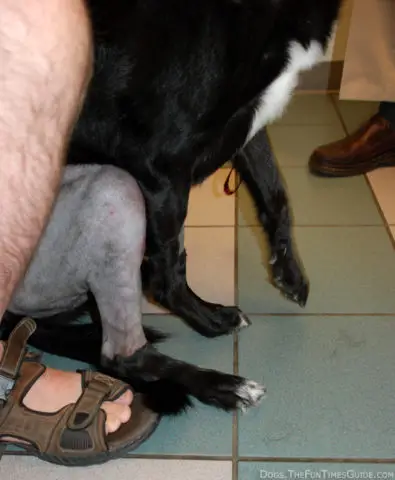
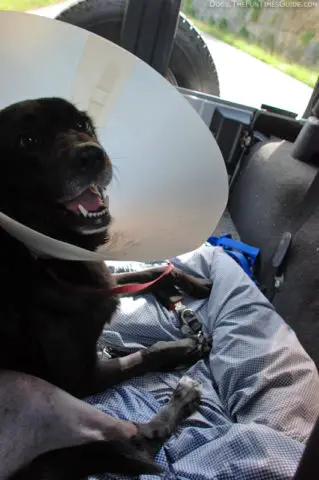
 

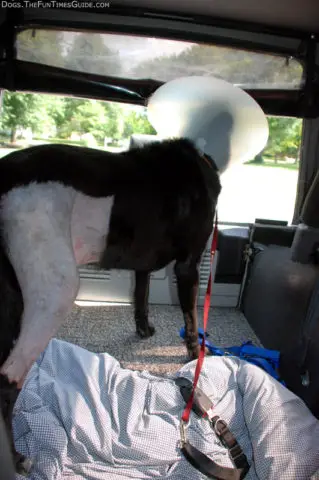
conehead-dog-tenor-in-jeep.jpg  dog-with-ecollar-in-jeep.jpg


Stay tuned… tomorrow I’ll post photos and details of Tenor’s recovery from TPLO surgery!
Lynnette Walczak

I like to help people find unique ways to do things in order to save time & money -- so I frequently write about "outside the box" ideas that most wouldn't think of. As a lifelong dog owner, I often share my best tips for living with and training dogs. I worked in Higher Ed several years until switching gears to pursue things I was more passionate about. I've worked at a vet, in a photo lab, and at a zoo -- to name a few. I enjoy the outdoors via bicycle, motorcycle, Jeep, or RV. You can always find me at the corner of Good News & Fun Times as publisher of The Fun Times Guide (32 fun websites).

More Posts - Website

Find me here:
TwitterFacebookLinkedInPinterestGoogle Plus

  • Amanda

    Lilly our black lab 3 1/2 now had TPLO May 2009 and we did everything to keep her well…she had some infection but that cleared up and we were doing so well. One day when I wasn’t around my husband decided it would be a good idea to see how she would do running. She limped some afterwards on her “good” let but seemed okay after a few days. She has played with our other family dog several times and always seems to limp afterwards. Now tonight she is limping and toe touching with the “good” leg…I am so worried we are in for surgery 2 coming soon. At this rate she will be at full tilt when she turns 5… and that stinks but if we don’t do it we are not giving her the best life. We will have to wait until we pay off this first surgery in order to do the next one so for now I am holding her off on Deramaxx and Glucosamine and Adequane shots every month. Okay, so thanks for letting me tell you all about this…I have been so stressed that this would happen since the day she had hers surgery in May :(

  • manny

    Hello Tracey.. My Pit Bull Dallas just came home yesterday. She had TPLO surgery and i hope her recovery is as good as i read on these posts. I wish i would have seen a few more doctors to get 2nd-3rd opinions but i will do that next time. The doctor said Dallas may need surgery on the other leg. I felt so rushed to get things taken care of. I could stand seeing her in pain so my wife and i went with the Dr. our vet suggested. The total cost was $4066.. it drives me crazy to read from some how this is a very profitable procedure for the doctors. I wish the care of someones pet is top priority and not the prfit from the surgery. Either way i needed to do somehting. $2400, $4400, or higher… i was willing to pay to make sure Dallas was ok.
    I hope your dog has had a great recovery

  • Anonymous

    I have a 34 month old female Akita (Malibu) who is, as I type, in her second TPLO surgery. She had her first one July of 2008 when she was just over 1 and she recovered amazingly. She slipped in August of 2009 and has been doing the “toe touch” since. We did rest her time and time again to the point where she would be good and then she would turn the wrong way while chasing the Pom (Boone) and we would be back at square one. We opted to have the surgery done now so she is healed by summer and ready to go. At the rate that she is going, with no exercise, she is not as healthy as she could or should be. She tips the scales right now at 120lbs and could definitely stand to loose a good 10 to 15 of them.

    It is a very expensive surgery to have. We are from Alberta, Canada and the first surgery that she had was in Calgary which cost us $4000.00 +. I did some research and I am sitting in Great Falls Montana where her surgery will cost me half that. $2100.00 I call her my “Million Dollar Dog”. She is worth every penny of it and I can’t wait to see her run like she should be able to. I hope she recovers from this one as flawlessly as she did the last one.

    UPDATE…..

    6 weeks after Malibu’s surgery she is doing amazingly. Walks without a limp and is healing up at over 85% already. 6 more weeks of “recovery” to go and she should be back to wonderful! She goes for walks everyday and each day is a little farther. She tires out quite quickly as she hadn’t used her leg or gone for walks for 5 months. The weight is coming off of her and her energy level is way up! She is going to be able to be a real dog again in no time and go out and play and run like she should!!! YAY!!!

  • Anonymous

    Your information about Tenor was extremely helpful. Our 8 month old lab, Cooper, caught his right front leg in the recliner 3 days ago. Unfortunately, he broke his leg in 2 places. He had surgery the following day and we picked him up the next day (yesterday). It has been extremely difficult thus far in his care (and I am an RN). I am so afraid he’s going to redamage the leg. Thank you again for sharing your story

  • Nita

    Just came back from the vet where our 1yr old rottie was diagnosed with not one torn acl but both. She will need surgery on both knees.My heart hurts for her and what she must be feeling. Thanks for all the information on the pre and post surgery experience. I now know what is to be expected.

  • Pittsburgh

    Thank you so much for posting this. Our 6-year old Germ Shep/Black Lab mix just tore his knee the other day and everything you have said here is exactly (exactly!) what we were told. You have made it more real and promising that what I have been imagining. I’m glad your pup’s doing well, and the surgery went well. Best of luck!

  • http://twitter.com/LizStrand Liz Strand

    Thank you, thank you, thank you! After scheduling my cocker spaniel’s surgery, I’ve seen a few things saying dogs don’t usually need the surgery (even big dogs) and then heard nightmares about the recovery. After stumbling on this, I am feeling much, much better. It’s been nearly 2 months, and she’s gotten worse, not better. She had another issue in a front leg 2 wks earlier that went away with a few days of Deramaxx, so I had assumed that’s what it was until it wasn’t better after 10+ days. Then the vet I saw just had us keep giving her that for awhile. I took her to a different vet the next time, who gave the diagnosis of a (partially) torn CCL/ACL.

    Anyway, I was beginning to think I needed to just cancel the surgery, but after reading all of this, I feel much better about the whole process! It matches what my vet said, and what a few other vets have said who have no financial stake in it (friends of my sister & friends of a friend). I will continue to reference this as she goes through the procedure, and hopefully will have some positives & info to share with other people too!

    • http://thefuntimesguide.com/ FunTimesGuide

      Liz – I’m so glad you’ve found our experience with the TPLO surgery helpful and that it could bring you some peace of mind about your decision. Keep us posted on how your dog’s surgery goes :-D

  • Amanda

    Well Lilly our 4 year old Lab who had TPLO this time last year on her right leg just got home from her second TPLO on her left leg. She looks a lot better this time around and I guess maybe I am not as scared. She is not putting the leg down as much as she did last time. I will update on her recovery later but for now we are doing well. I hope everyone else is doing okay.

    • Amanda

      We are on Day 12 of being home. Lilly has just not started noticing her incision and wanting to lick it. We have ALL done much this time around. She goes Thursday to have her staples removed and for her first Hydro Physical Therapy. Thanks for all of the thoughts and prayers. Ours are going out to all of you going through this.

  • Anonymous

    My rottweiler Dakota had her left leg done in May of ’09 and she is currently not putting down her right leg… :( I have not been to the vet just yet because I think I am afraid to hear the inevitable. I had a REALLY hard time with the first surgery from the cone to crating her and the sedatives. I was a mess everyday. We are moving in August, do you think she will be ok with rest until we get settled and can get her to a vet in our new home town?

    • http://thefuntimesguide.com/ FunTimesGuide

      dakotakel – I don’t know for sure how it goes when it’s the dog’s 2nd leg that goes bad, but I’m guessing it would be similar as with the first. Based on that, I can tell you that when my dog wouldn’t put weight on his leg before his 1st & only surgery, our vet said we could go MONTHS without surgery — it was our choice — because it couldn’t get “worse” or become more of a problem than it already was. He said our dog simply would continue to not put any weight on that leg (and he got around quite well actually) until after the surgery. The vet made it sound like we shouldn’t feel guilty if we couldn’t do the surgery right away for some reason. (We did. But he said it was okay, if we didn’t.)
      Perhaps that will help to reassure you a bit…

    • Kjd2121

      Oh nice. How would you like to have that much pain in your leg. You could at least get over your issues and take proper care of the dog. Your dog needs to see a vet for at least some pain meds. Let me kick you in the knee and see how long you can last with the pain. You piss me off.

  • Eva Oliveira

    My 11 year old Alaskan Malamute tore his ACL three months ago and I have been struggling with what I should do. He is obviously old, he weighs 135 pounds, and I live in a house that has 20 stairs. The doctor told me the surgery would cost $5,000!! He has been doing okay with the bad leg, until recently. The last couple of days he has been in a lot of pain and will not put his leg down. He drags his foot when he walks. I feel real bad and I don’t know what to do. Should I do the surgery? He is old, but full of life. If it wasn’t for his knee, he would be running around. He was in great shape until this happened. The recovery after the surgery is going to be very difficult. My dog likes to chase after cars and the newspaper man and certain dogs and he forgets that he has a bad leg and I think he made it worse because he was probably chasing something again. I think that if I do the surgery, he will just reinjure himself again. Help!

    • Relic1

      my dog had his surgery april 7, recovery was very difficult, leash only in the back yard to do his business, no jumping on furniture, i never left him alone for the whole time, we just started him on small leash walks 3 weeks ago all was going fine and then last night his saw a rabbitt and broke away from me and now today his his hopping on 3 legs, he can not put any pressure on it at all, i’ve consulted a vet who gave me pain killers and said if in 3 days he is still not walking on it, it has failed, if i had to do it all over again, i would go the other way and let it heal on its own, the time is about the same as if the dog had surgery and the rules are the same, leash only, no jumping. running or playing for 10 weeks, so yes it is quite possible that your dog will reinjure himself as mine has, and i’m sure when i get him well again, he will once more reinjure, i don’t think his leg is ever going to heal, i hope your dog recovers and can once again play and run

  • Katie

    My 10 yr, 17lb. cairn had the fishline surgery on his left hind leg in May, 2010. It was a nightmare. He has separation anxiety, goes crazy in a kennel and I have 4 other cairns in the house.. For 6 long weeks he was restricted to our deck for potty breaks. I carried him everywhere and didn’t dare leave the house for fear of him jumping around in the kennel. Long story short, the surgery failed…$3,000 down the tube. After 6 wks I gave up and he started putting weight on the leg. He’s on metacam and he seemed to be doing great. Well, now the other leg has failed. After X-rays and consults the vets inform me that he apparently does not build up scar tissue and this is an important part of the healing process. They scratch their heads as to how or why he is doing so good on the leg that was operated on. As for the other bad leg, now it has to be a wait and see period. I can’t afford another $3,000, my husband would take the checkbook away and they tell me a wait and see attitude it not a bad thing. I feel terrible, I know it hurts him, but that’s my heart talking, my head tells me I’d be very foolish to try any surgery again. Sooo. my advice, after what I have gone though with my terrier would be.. not to rush into any knee surgery. Consider how your dog reacts to everything. If he’s a couch potatoe he would probably do great but if he’s not, believe me, every minute will be spent careing for your pet for at least 6 or more weeks.. good luck to anyone that considers surgery because it’s not easy.

  • stoli

    OMG! Tenor looks just like my dog Jack!

  • Jdockery

    Our seven year old, 110lb bloodhound, Flash, had TPLO surgery two years ago on his right leg and the left one went out today. I am calling tomorrow to schedule the surgery for his left leg. We did the TPLO surgery for the right leg and you would never know he had surgery on it. They told me that the key is to keep him off of his feet and for him to rest it for 10-12 weeks. The recovery was the hardest part, for him and for me, he likes to be right by my side all of the time, but had to be in a small area to prevent him from re-injuring himself. Your story is exactly what happened with Flash both times. Took off running, then “Yelp!” He has been on Glucosamine for quite some time now and they advised us that it would help with the athritis after the TPLO as well. I know that he will soon be chasing squirrels and tennis balls again.

  • mgiere7

    My 11 year old, 45 lb., German Shepherd/Chow mix (Scarlet) had TPLO on her back left leg 9 months ago. I didn’t see the initial injury happen, but it sounds very similar to the story above. My best guess is that the initial injury occurred while she was playing rough with other big dogs at day care. She limped for about a week and was getting better when she took off on a sprint, yelped and wouldn’t put weight on it again. Once we figured out it was her knee (and not her hip), the vet discussed the options of TPLO versus “traditional” surgery (the estimated cost difference was about $700).

    Given her age, it was a tough call. She is very active (I live in Colorado and she loves to hike and snowshoe with me) and looks and acts half her age. In the end, we opted for the TPLO in hopes it would result in a more stable joint and she would be back on the trail with me within a year. The good news – the surgeon said it was a “clean” and complete tear of the ACL, there was no sign of arthritis in that knee (a little in the other back knee…which we already knew), and the meniscus was in good shape so they were able to leave it in place.

    Despite diligent PT (with help from a clinic that rehabs police dogs), recovery has been slower than anticipated. We suspect her age has been a factor, but the primary problem has been muscular…along her spine (low back) and shoulders. As I said – this despite diligent PT including massage, electro-stim therapy, work on a water treadmill, and even an electro-stim whirlpool on really bad days.

    That said – she was getting better. Then about a month ago (8 months post-op), she slipped on the ice and started limping again…same leg. I periodically heard a popping noise coming from the knee – particularly as she climbed stairs. The odd thing — the severity of pain and the degree of limping varies.

    So – now the vets suspects she has torn the meniscus and are suggesting another surgery to remove it (and remove the plate while they are in there). As for me – I am doubting that I picked the right surgery in the first place and am thinking that the muscular problems she has had make sense given that we have completely (and permanently) messed up her bio-mechanics. Now I just want to do the best thing necessary to stop the spiral that I see happening next. My biggest concerns include: 1) stress and damage on the other knee (especially given the prospect of an another extended recovery), 2) development of arthritis in the injured knee (I understand it to be inevitable and likely to happen soon given complete removal of the meniscus), and/or 3) kidney problems from all the pain killers (Note: she also had dental surgery 2 month prior to TPLO…this would be #3 in 10 months).

    Arthroscopy has been mentioned (by the PT vet and one other vet I know) as less invasive and hopefully easier to recover from. But the surgeon won’t even consider it – citing costs. Nor would he even discuss other possibilities (besides complete removal) that I have heard mentioned such as meniscal release (should it not be torn but only pinched) or partial removal (if possible).

    I’ve postponed surgery so I can get another opinion and do more research. If anyone has experience or other suggestions…please let me know.

  • Jane

    Today we brought our 100 pound 4-1/2 year old German shepherd Lucy home from ACL surgery. She is the love of our lives. She had the surgery yesterday and had to spend the night. Surgery went well. She is already eating, I put 1 pound of steak in with 2 cups water and one cup rice and when the rice is done I add about 1 cup of frozen peas. No spices, she loves this, and it’s good for her, I am so happy to see her eat so soon after surgery although I did not give her a big portion of it maybe 2 cups. My dog had been limping or favoring her right leg for a week or so, than she was outside running and playing with our other 2 German shepherds in the snow and all of a sudden she yelped and would not walk on the leg at all. We had an appointment the very next day after she did this with vet to look at it, than the next day we took her back for X-rays and a visit with the surgeon and then 6 days later surgery, so time from injury to surgery was 7days.
    I have been so worried about what to do after we brought her home, and your advice is wonderful and I got so much out of it, I want to thank you for the help. It will help my wonderful pet with a better, speedier recovery.
    Jane

  • Anonymous

    Well I’m back. Mikie, our catahoula/lab mix, had his first TPLO back in the winter of 2007 I think. It was after a freak snowfall here in SE Louisiana and he was tearing up and down the fence line with his buddies next door when he evidently slipped. We couldn’t have been happier with the results. Today Mikie had his second TPLO, done by the same vet, and we will get to pick him up tomorrow. What we initially thought was just arthritis didn’t get any better when the weather warmed up which led us back to the vet. At least this time the rehab will be easier for us as I am now retired and will be able to look after him all day. Can’t wait for the next 3 months to be over so he will be back to normal.

    • http://thefuntimesguide.com/ FunTimesGuide

      Wow, 3-1/2 years huh? That’s how long until the other leg went out… Lots of dog owners have been asking how long until you feel you’re “in the clear” and the other leg won’t need surgery. I’ve always said that you never REALLY know. But it’s good to hear how long it was for a fellow TPLO dog here. Since you’ve been through it once, I’m sure it will be easier and he will heal even faster because of what you know now. Give him a big hug from all of us! Thanks so much for the update :-D

  • Anonymous

    Let’s see. Six days post-op and Mikie is doing well. I actually think he started putting his leg down earlier this time. Seemed like the first surgery it was a couple of weeks. This time the second day he put it down. Not weight bearing, but hobbling along with it. He hasn’t realized the e-collar requires more clearance when walking between furniture in the house. When no one is home he is confined to one of the back carpeted bedrooms. Otherwise he pretty much free roams the house. Single level so no stair worries. And so far he has no desire for much more than going out, taking care of business and getting back in the house. Swelling in the leg is pretty much gone. More later….

    • http://thefuntimesguide.com/ FunTimesGuide

      @brooksmd:disqus Thanks for the update! Glad to hear the recovery is fairly smooth so far. Appreciate the updates…

  • Barbs

    Thanks so much for posting article. So helpful when you’re faced with the same situation.

  • Karl

    Our 98 lb. Dogue de Bordeaux had his 2nd TPLO surgery 2 weeks ago.  It cost $4,100.00 in Akron, Ohio.  When he injured this 2nd leg, he couldn’t use the leg at all, so we knew we had to do the surgery again.  The surgeon that did his 1st surgery actually told us that the likelihood the 2nd leg would also need the surgery was between 50-80%.  His first TPLO was 2 years ago, so we’ve forgotten a lot of what we went through the 1st time.  This time, he started tapping the leg down within a couple of days post-op, but within a few days of stopping the pain meds (doctor’s orders), he again won’t use the leg at all.  The surgeon told us to stop the pain meds after a week so the dog would be reminded that it hurts & not to do something stupid.  Yeah, try telling a dog that. 

    We live 2 1/2 hours from the surgeon’s office, so unfortunately, we can’t just put the dog in the car & whenever we need reassurance, take him to make sure everything looks okay.  There’s no redness, no swelling & he continues to lay on the leg daily, which I don’t think he’d be doing if there was something seriously wrong.  I’ve called the surgical tech the past 2 days, seeking reassurance that something hasn’t gone wrong because of the abrupt change from his using the leg to now not using it at all, & she believes this is normal or not unusual for a dog this size.  She said that larger dogs tend to be more cautious to use the leg & once they’re off the pain meds, there’s nothing there to mask the pain like there was the 1st week. She said he will begin using the leg when he’s ready & to try to make him walk slowly so he’s more inclined to use the leg.  We take him back to the sugeon for a recheck in a week & I will be praying that everything looks okay then. This 2nd TPLO for us has been extremely stressful.  We are so afraid that with other animals in the house (3 cats & another dog), something will happen that will cause the dog to do something & injure himself.  I’m sure the 1st TPLO was stressful as well, but since 2 yrs have passed, you forget.  Even though you try so hard to remove any potential problems from their environment & try to keep them quiet & confined in movement, it seems you can’t prevent everything & that is when you stress & worry.  

    My advice to anyone going through this is; if you can be home full-time with the dog for at least the first 2 wks post-surgery, that would be a good idea.  If you can’t be home and you have other pets in the home or you have no where in the home where the dog can be completely isolated, be prepared to crate the dog for as long as your surgeon recommends.  NO SLIPPERY FLOORS OR SLIPPERY SURFACES IN THE CRATE.  The dog has to have traction to help itself get up.  You may have to buy carpet remnants to cover tile, laminate or wood floors.  The dog has to be kept quiet and restricted in movement as much as possible until the leg heals and the surgeon releases him from confinement.  No visitors.  I removed the batteries from our doorbells & put notes on all the doors telling people not to knock, as I knew this would excite our dog.  Make sure you and your spouse or other members of the household are on the same page for caring for the dog post-surgery.  Everyone, including children, need to understand that the dog cannot be played with or gotten excited.  One or two stair steps to get outside to go to the bathroom is okay, but no staircases.  Until the surgeon tells you otherwise, the dog can only go outside to go to the bathroom and should not be walked around, even to try to get the dog to have a bowel movement.  A short leash is mandatory & you stand still in the yard until the dog does it’s business, then right back into the house.  If the dog doesn’t do it’s business the first time, take it back in the house & try again later.  Get some things for the dog to occupy itself, such as stuffing a kong with pnut butter, so the dog can be lying down and busying itself.  If you can have the dog be quiet and lying down, it will enjoy being in a common area of the house (like watching TV) with you on a short leash and under control.  Be cautious if you have any other pets in the home, that one of them doesn’t do something to cause the dog to want to jump up or make a quick movement.  If you have other pets or distractions around when you have the dog in the common area, you will constantly have to be watching and be ready to move quickly if something happens that causes your dog to want to jump up.  Again, make sure all slippery floor surfaces are covered with carpet.  And finally, be prepared to be completely stressed out.  I swear my hair will be completely gray by the time we’re through all of this! 

  • Karl

    Our 98 lb. Dogue de Bordeaux had his 2nd TPLO surgery 2 weeks ago.  It cost $4,100.00 in Akron, Ohio.  When he injured this 2nd leg, he couldn’t use the leg at all, so we knew we had to do the surgery again.  The surgeon that did his 1st surgery actually told us that the likelihood the 2nd leg would also need the surgery was between 50-80%.  His first TPLO was 2 years ago, so we’ve forgotten a lot of what we went through the 1st time.  This time, he started tapping the leg down within a couple of days post-op, but within a few days of stopping the pain meds (doctor’s orders), he again won’t use the leg at all.  The surgeon told us to stop the pain meds after a week so the dog would be reminded that it hurts & not to do something stupid.  Yeah, try telling a dog that. 

    We live 2 1/2 hours from the surgeon’s office, so unfortunately, we can’t just put the dog in the car & whenever we need reassurance, take him to make sure everything looks okay.  There’s no redness, no swelling & he continues to lay on the leg daily, which I don’t think he’d be doing if there was something seriously wrong.  I’ve called the surgical tech the past 2 days, seeking reassurance that something hasn’t gone wrong because of the abrupt change from his using the leg to now not using it at all, & she believes this is normal or not unusual for a dog this size.  She said that larger dogs tend to be more cautious to use the leg & once they’re off the pain meds, there’s nothing there to mask the pain like there was the 1st week. She said he will begin using the leg when he’s ready & to try to make him walk slowly so he’s more inclined to use the leg.  We take him back to the sugeon for a recheck in a week & I will be praying that everything looks okay then. This 2nd TPLO for us has been extremely stressful.  We are so afraid that with other animals in the house (3 cats & another dog), something will happen that will cause the dog to do something & injure himself.  I’m sure the 1st TPLO was stressful as well, but since 2 yrs have passed, you forget.  Even though you try so hard to remove any potential problems from their environment & try to keep them quiet & confined in movement, it seems you can’t prevent everything & that is when you stress & worry.  

    My advice to anyone going through this is; if you can be home full-time with the dog for at least the first 2 wks post-surgery, that would be a good idea.  If you can’t be home and you have other pets in the home or you have no where in the home where the dog can be completely isolated, be prepared to crate the dog for as long as your surgeon recommends.  NO SLIPPERY FLOORS OR SLIPPERY SURFACES IN THE CRATE.  The dog has to have traction to help itself get up.  You may have to buy carpet remnants to cover tile, laminate or wood floors.  The dog has to be kept quiet and restricted in movement as much as possible until the leg heals and the surgeon releases him from confinement.  No visitors.  I removed the batteries from our doorbells & put notes on all the doors telling people not to knock, as I knew this would excite our dog.  Make sure you and your spouse or other members of the household are on the same page for caring for the dog post-surgery.  Everyone, including children, need to understand that the dog cannot be played with or gotten excited.  One or two stair steps to get outside to go to the bathroom is okay, but no staircases.  Until the surgeon tells you otherwise, the dog can only go outside to go to the bathroom and should not be walked around, even to try to get the dog to have a bowel movement.  A short leash is mandatory & you stand still in the yard until the dog does it’s business, then right back into the house.  If the dog doesn’t do it’s business the first time, take it back in the house & try again later.  Get some things for the dog to occupy itself, such as stuffing a kong with pnut butter, so the dog can be lying down and busying itself.  If you can have the dog be quiet and lying down, it will enjoy being in a common area of the house (like watching TV) with you on a short leash and under control.  Be cautious if you have any other pets in the home, that one of them doesn’t do something to cause the dog to want to jump up or make a quick movement.  If you have other pets or distractions around when you have the dog in the common area, you will constantly have to be watching and be ready to move quickly if something happens that causes your dog to want to jump up.  Again, make sure all slippery floor surfaces are covered with carpet.  And finally, be prepared to be completely stressed out.  I swear my hair will be completely gray by the time we’re through all of this! 

    • http://thefuntimesguide.com/ FunTimesGuide

      What GREAT tips, Karl!! Thanks so much for taking the time to share your story. Especially since no 2 stories (and no 2 TPLO surgeries) are identical. Your advice and experience really helps…
      I definitely agree that you should try to be home fulltime for at least the first 2 weeks. Otherwise, you’ll be a wreck worrying about him and your dog may be more apt to injure himself if your eyes aren’t glued on him 24/7 anyway. Fortunately, I work from home, so I was able to be home round the clock after my dog’s surgery.I also love your advice about no slippery floors or slippery surfaces in the crate — something you don’t really think about until the last minute.I think you’re right, having other pets in the house is one of the most stressful parts — simply because of the additional variables/noises/interactions that you have to constantly be on guard about. Post-surgery is a trying time, but in the end the surgery is definitely worth it and all will be back to normal soon. We’re 3 years post-op and no signs of his other leg giving out on our 98-pound Lab mix. Sometimes he limps ever-so-lightly on his surgery leg in the brief moments after he just gets up after a long time of lying down. Then he usually does a l-o-n-g stretch of that leg (as if he knows it helps), and he’s walking normally once again. I recently started giving him Glucosamine and Chondroitin to help with any future joint issues. *so far so good*Thanks again for sharing your story!!! Best wishes for a speedy recovery :-D

      • Anthesafos

        Hi! I’m writing in regards to a similar situation. My 60 lb. Lab had TPLO surgery about a year and 1/2 ago, but just this last month has slightly limped on her TPLO leg after rising from the ground after a day of exercise. She stretches out her TPLO leg like your dog does and then is fine. Just wondering if your dog is still doing that and if you went to the vet or did xrays to see why? She had a full tear and they removed the meniscus too so I know it can’t be that. She did have some arthritis so wondering if that could be it or if she overstrained it somehow. She is a fetchoholic labrador who loves to run and fetch. If she would overdo it, sometimes she would be a little stiff getting up, but never a limp. I’m just racking my brain to figure out why it is her TPLO leg. I for sure thought it would be her other knee since it is about 50% that that ones goes out. Any advice would be helpful. I’m just really sad about it since she had a wonderful recovery and the last year and 1/2 , you would have never known she had knee surgery.

        • http://thefuntimesguide.com/ FunTimesGuide

          Hi Anthesafos – My dog is still doing those l-o-n-g stretches and he’s using BOTH legs for it these days. Actually, it looks more like a human yawn and full body stretch to me now. We never had x-rays or anything. And he doesn’t seem to have any problem with his surgery leg almost 3 years later. Sometimes, when he just gets up from sleeping, he will barely appear to limp on the surgery leg, but after his 2nd or 3rd step, he’s back to normal and you’d never know that was his bad leg. I bet your dog is reacting to arthritis or just plain stiffness in that leg. I started giving my dog Glucosamine & Chondroitin supplements about a year or so ago. I think it helps to lessen & prevent the stiffness and joint pain. More about those 2 supplements: http://dogs.thefuntimesguide.com/2011/04/dog_glucosamine.php

    • Anonymous

      Thanks, this was very reassuring! And the stress … I had NO idea it would be so bad. Our 85-lb lab is almost 3 weeks post-op. She did great the first 2 weeks. One of us stayed with her all the time. She was in an old wooden playpen for 10 days, and she seemed to be walking pretty well on her trips outside. Now she’s confined to a carpeted room where we hang out and watch TV. We’ve mostly been keeping the other 2 (large) dogs away from her, but during their occasional visits they’ve actually been quite sweet/gentle with her. We took her to the vet to get the staples removed @c0af5c9dad3bfb59a529250657650e9f:disqus  2 weeks post-op. She was scared and wouldn’t stand still, and I think that made her leg even more sore … and a few days later the meds ran out. So now she’s not wanting to put much weight on that leg. It makes sense now that I read your post. She was on 6 tramadol a day plus 2 rimadyl, plus the fentanyl (sp) patch for 5 days. No wonder she’s hurting now. What I’m wondering is how far we can let her walk. The vet said a slow 5-minute walk several times a day is fine. But I’m nervous about even that. She won’t go back to the vet until she’s 8 weeks post-op, for x-rays to be sure everything has healed. I’ve been looking at Youtubes of dogs at various stages of recovery, and I hope she’s progressing ok. I still don’t like leaving her alone, although we’ve barricaded the furniture so she can’t jump up and we’ve put a baby-gate in the doorway. I worry too much. Will continue reading the responses here and hope to find even more good info. Thanks! PS. The surgeon admitted that they present the “worst case scenario” to dog owners, because if they didn’t folks wouldn’t be cautious enough about keeping their dogs from jumping around and running up and down stairs.

    • ksaseniuk

      My dog will be undergoing surgery in a few days and I found this very helpful! Thank you for all the great advice!

    • Shannon S

      My 2 year old boxer partially tore her ACL and we just found out. Your tips are wonderful. Thank you!

  • Rori

    Thank you for posting this. My Boxer was just diagnosed with this, and we cannot afford the surgery…I am heart broken!!!!

  • Gdireland

    after surgery for ACL on m corgi, the skin pigments in the  shaved area is turning black.  Is that normal as he is a blond dog?

  • Mary

    My dog’s ACL surgery cost $300. I’m not kidding. $300. Go see Dr. Tucker in Ozark, Alabama. It’s in the middle of nowhere but worth saving $4,000. He’s the best Veterinarian and my dog is very happy three years later!

  • http://thefuntimesguide.com/ FunTimesGuide

    Hmmm… good question, Tara. I can see it both ways. Personally, I remember those very first days after the surgery… and I would want things as quiet and comfortable for him as possible. We kept our dog’s crate in the bedroom the entire time. To give him ‘company’ I spent long hours at a time in the room with him — just being nearby. That said, since there are SO MANY weeks of recovery in store here, I think moving him to a more active part of the house would be a nice change of pace after maybe the first 4 days or so. Just my opinion :-D

  • Missy

    Our dog has had TPLO surgery on both of her knees. Each time we set her up in the living room, but barricaded it off from the rest of the house . We did set up an air mattress, which one of us slept on for the first few days. We didn’t want her to feel lonely during her recovery, they don’t understand. I would keep the other dogs away from her, unless they can all lay quietly together. Our dog healed much quicker than anticipated both times. Good luck!

  • Shannon S

    I just found out 3 days ago that my boxer, Bella, has a partial tear in her ACL. Is there any advice or helpful tips you would give someone going into this! We live in Idaho and have to travel 3 1/2 hours for the surgery. I honestly don’t know what to expect, your post has given me and my husband a lot of info and I wanted to thank you for that!

  • Elise Muehlenberg

    My dog Bailey had a complete ACL tear earlier this year, so I took her to the vet and she told me it would cost $3500 to fix it. We didn’t listen to her and we are glad we didn’t. I did some research on conservative management options, and I decided to purchase Dr. Spatt’s brace from WoundWear for $300. When it arrived Bailey was hardly walking and if she did she would hold the leg up. Once in the brace she started to bear weight again, and within a couple of days, I was able to walk her for 5+ minutes. She had it on 24/7 for 3 months for walks and the doggy park. Bailey is 100% healed from using the Woundwear A-Trac Dynamic Brace. This product saved me thousands of dollars and greatly improved the quality of Bailey’s life. My vet has also been extremely impressed and said she would feel comfortable recommending this brace after seeing the huge improvement. I highly suggest this brace to everyone looking for a conservative management option!

    -Elise M.

  • Pingback: Update on Taj Mahal « The Baby Blog

  • Pingback: Dog E-Collar: Is It A Necessity? Are There Any Alternatives? - The Fun Times Guide to Dogs

  • Tracey Hostler

    Thank you for this post. My 3 year old golden retriever just had this surgery on Wednesday and I was so worried about her putting weight on the leg. On top of the torn ACL, she also had a bucket handle tear in her meniscus. The vet I normally take her to could not do the surgery so I was referred to an animal hospital about 45 minutes away. When I picked her up on Thursday, I was so upset because she was putting weight on her leg and was hobbling around. My regular vet had told me that she wouldn’t be allowed to put weight on it for two weeks. After first meeting with a tech, the rehab therapist brought her to me and said the only time I really had to lift up on the sling to take the weight off of her leg was when she went to the bathroom & when I brought her up the deck steps. I then met with the doctor that did the surgery who told me if she wants to put weight on her leg that is a good thing and I am to let her do it. I have been worrying myself sick for the last three days that she was putting weight on it. She is hobbling so I know her full weight isn’t on it yet but it was a relief to read your article and see the pictures of Tenor walking & standing on his leg. Like Tenor, her bruising is a bright red/purple combination. She hates the crate so she is confined strictly to the living room because of the carpet. The furniture is flipped over when I leave for work so there is no chance she will jump on it and my other dog is taken to my mother’s so there is no chance of playing. The one thing I would highly recommend is tell people to stay away from visiting and don’t let anyone ring the doorbell. The calmer you can keep them the better. My aunt came out to help yesterday & all my Stella wanted to do was get up and down to see her. Her ankle swelled horribly from using the leg too much & she kept lifting it up last night from using it too much. I iced the ankle & leg & now the swelling is down but she is very worn out today. When I picked her up, the one receptionist told me her 9 year old newfoundland just had his second tplo surgery. I asked her if she had any advise — she said “drink a glass of wine & breath–it will be a rough two weeks and then it will get better”. The first night, I wasn’t sure I would last two weeks, but we are now on our way to recovery & I will survive & get my baby through this. I do have to say though–my first quote was $2500-$3000. The final bill was $3800 and that did not include the $400 I paid my vet to put her under and do the xrays to see if the ACL was torn. I truly appreciated you sharing your experience with us and you have definitely eased my mind as to how much she is using her leg. Thank you.

    • http://thefuntimesguide.com/ FunTimesGuide

      Awe – what a sweet dog you have. And I’m so glad that we helped ease your fears a bit. Thanks for sharing YOUR story too! I think you make a great point – recommending no visitors/doorbells. Anything that could get your dog riled up should be put on hold for a few days… or weeks. Glad to hear that you and your dog are doing so well with the recovery – despite the minor ups & downs, which are normal. Cheers – *glass of wine firmly in hand* :-D

  • Teresa

    Lynnette, you are amazing for taking the time to respond to so many comments! One thing I haven’t seen here (yet, but still reading) is that our vet told us if the second leg does go, the regular suture surgery is a more feasible option because the TPLO leg is so strong. We went through the suture version on both legs for our pointer/pit mix one year apart. Now our Pyr/Lab mix (like yours, but white with black spots) is a tri-pod so she is scheduled for TPLO next week. I keep second guessing if we should just stay with the suture surgery because of the pain and recovery for HER (money is not the issue fortunately). Our 80 lb dog did well with the lesser surgery, but he was 9. This girl is 102 lbs, only 2 years old, and thinks she’s a race horse. I’m sure we’ll be back to share stories in the weeks/months to come. Hopefully our info will help someone else, as you have done with this blog. Thank you!!

    • http://thefuntimesguide.com/ FunTimesGuide

      Hi Teresa – Interesting – and good to know! (what your vet said about the best type of surgery if the second leg goes). Regarding your 102lb 2year old dog having TPLO, I’d definitely recommend the full TPLO surgery. I recently read this:
      ““It has shown to produce excellent results, often with less arthritis. It is usually recommended for dogs that weigh more than 50 pounds.”
      http://www.findavet.us/2010/12/how-to-manage-your-dogs-acl-tear/

      Keep us posted!!! :-D

  • gvm10

    Thanks for detailing all this information. Our 88lb female German Shepherd dog is recovering at the vet now from this surgery. She will stay overnight. We live in an expensive area of CA and the cost runs $3800-$4500. It is good to be aware about the swelling, and like the advice about disconnecting the doorbell as she will be recovering in the living room most of the time. It is reassuring to read that the information your vet gave you is very similar to what our vet described to us. Thanks again for all the photos and helpful information.

    • http://thefuntimesguide.com/ FunTimesGuide

      gvm10 – oh good. Glad to hear that your vet said pretty much the same things. Thanks for sharing your experience – it’s very helpful to others going through the same thing :-D

  • http://www.facebook.com/profile.php?id=100004531062210 Ron Miller

    We just took our newfie Jackson in for both knees today he is 9 months on thursday and weighs 48 kg or about 106 lbs. Our cost is about 6000 and we know the doctor, she had done suuka our other newfoundland when he was 1.5 years old.He lived a happy 13 years with minor arthritis only after the age of 10-11.I am hoping things go a well with Jax as it is going to be a long healing process.We used glucosamine and think it helped sukka,and also rimadyal really really helped when he was older.

    • http://thefuntimesguide.com/ FunTimesGuide

      Thanks for sharing your experience, Ron. I’m glad to hear you used Glucosamine. We are too. One of my biggest fears after Tenor’s surgery was that arthritis would set in. His food has Glucosamine in it as well. I’m so happy to hear that Sukka lived a long happy life after the surgery! Here’s hoping that Jackson’s story goes just as well. It helps that you know what to expect now that you’ve been through it once.

  • palmerlakedog

    Thank you for this wonderfully informative ‘diary’. Our pup George (7 year old twin of your Tenor) had TPLO 2 days ago. One month ago, he was running and sitting with no problems, until one Saturday after a jaunt at the local dog park. When he got home, he was hesitant to climb the stairs, or jump back into the car. No other apparent discomfort. The xrays didn’t show anything conclusive, so we agreed to an arthroscopy. The vet (Dr Bauer in Colorado Springs) would do so on both knees (though only the right was bothersome, he did so on both with no additional fee), and would TPLO the right only if necessary. He discovered some tearing, so performed the TPLO. We took him home the same day as the surgery ($3200), and were given the surgeons cell number. George is recovering nicely, and was up and about after 24 hours. Our biggest concern during the first 24hours, was we didn’t know how to assist him in, um, well, how to pee. We were uncertain if he could put any weight on his left leg, and didn’t know how to ‘posture’ him. So we waited, and waited. We had him dressed in a Ruffwear ( [webmaster harness|http://www.ems.com/product/index.jsp?productId=12886712&cp=3677338.11359846] ) vest, to help him stabilize when standing, and coned him. After calling the clinic and being assured nature would take its course, finally a full day after his surgery (and we’ve no idea if he’d peed prior to them taking him into the actual surgery), we dis-coned him, and he ran 3-legged into the front yard and had the most luxurious looooong pee, and gave us a big toothy grin of relief. We’re now about to embark on the Range Of Motion exercises suggested by the vet. It does appear that our canine friends adapt more readily to this surgery than we do.