
If you are living with an anxious pup, a hyperactive rescue, or a senior dog dealing with the aches of old age, you’ve probably looked into natural remedies.
When my own dogs, River and Harley, get restless during those booming Middle Tennessee summer thunderstorms, my first instinct is to find a way to soothe them — naturally.

Aromatherapy comes up in a lot of conversations with my friends who have dogs.
Yes, dogs can absolutely benefit from the calming and uplifting properties of certain scents, just like we do. Where certain scents will make you feel calmer, or more alert, less moody, or more energized — the same is true for your dog.
However, because a dog’s sense of smell is up to 100,000 times more powerful than ours, dog aromatherapy is not as simple as plugging in a standard diffuser or rubbing an oil on their fur.
In fact… if done wrong, it can be incredibly toxic.
If you’d like to try essential oils with your dog, here is the modern, vet-approved safety guide:
- What works
- What is dangerous
- How to use essential oil scents safely around dogs
- 10 best essential oils for dogs
- 8 aromatherapy recipes that work great with dogs
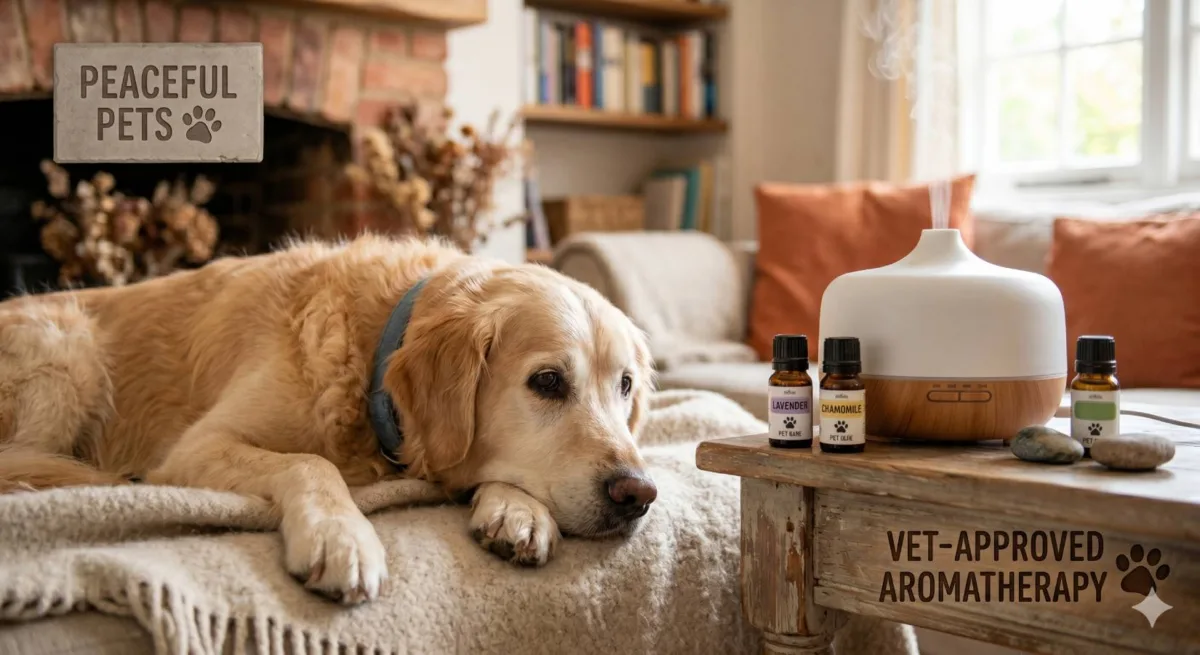
The Golden Rule: Quality And Purity Matter
In the world of holistic pet care, you get what you pay for.
If you buy cheap essential oils from a grocery store or major convenience store like Walmart or Target, they will likely have synthetic “fragrance oils” in them — just like standard plugin air fresheners do. Using those will expose your dog to synthetic chemicals and fillers that can trigger severe respiratory distress.
“It comes down to an issue of the quality of the essential oils used… When we see pets that have become ill thanks to a poor diet, we recommend the owner upgrade the diet as soon as possible. We don’t outlaw all pet food because there are low quality brands on the market – we just pick a better food.”
— Melissa Shelton, DVM
Always look for:
- 100% pure
- Therapeutic-grade
- Single-ingredient essential oils
- Brands that provide third-party testing results
Of the handful of respected veterinarians who share their own personal experiences and professional advice with pet owners regarding the safe use of essential oils around animals, Dr. Melissa Shelton is the one I’ve been following the longest.
I’ve trusted her recommendations since before she even started her own line of essential oils! By the way, her book The Animal Desk Reference II: Essential Oils for Animals is a great starting place if you want to know all the why’s and how’s before you start using essential oils around your own dog.
⚠️ Warning: Essential Oils That Are Toxic To Dogs
Before we look at the benefits, we have to talk about what NOT to use.
Many oils that are perfectly safe for humans can cause liver failure, central nervous system depression, and intense skin irritation in dogs.
According to the VCA Animal Hospitals and the ASPCA Animal Poison Control Center, you should never use these oils around your dog:
| HIGHLY TOXIC OILS TO AVOID |
| Tea Tree (Melaleuca) |
| Peppermint |
| Citrus Oils |
| Pine |
| Ylang Ylang |
| Wintergreen |
| Eucalyptus |
| Cinnamon |
| Pennyroyal |
Note: Older holistic guides used to recommend Peppermint or Eucalyptus to repel fleas. Modern veterinary toxicology has proven that these can be highly toxic upon skin exposure or inhalation. Stick to modern vet-approved flea preventatives instead.
Safe Scents For Anxious Pups

When sourced correctly and diluted properly, these 3 essential oils are widely accepted as safe and effective for dogs dealing with environmental stress, travel anxiety, or thunderstorm phobias:
- Lavender — The gold standard for calming the nervous system, reducing hyperactivity, and soothing travel anxiety.
- Chamomile — Excellent for calming frazzled nerves and easing a dog into a restful sleep.
- Frankincense — A grounding scent that can help reduce stress and support emotional well-being in highly sensitive or fearful dogs.
(Complete list of essential oils safe for dogs BELOW)
How To Safely Practice Dog Aromatherapy
Because your dog cannot tell you when a scent is giving them a headache or making them feel nauseous, you must follow strict application guidelines.
# 1 – Passive Room Diffusion (The Safest Method)
Using a water-based ultrasonic diffuser is the best way to introduce aromatherapy to your dog.
- Set up in an open room — this is crucial for your dog’s safety. Place your diffuser on a high surface where your dog cannot knock it over or lick it. Use only 1 to 2 drops of a safe oil like Lavender.
- Leave the door wide open — never trap your pet in a small space with a diffuser. Your dog needs to have an escape route — that way, if the scent becomes too overwhelming for your dog’s sensitive nose, they can leave the room.
- Limit the time — 30 minutes is the maximum amount of time any dog should be exposed to essential oils from a diffuser. Running the diffuser for 20 to 30 minutes is more than enough time for a dog’s olfactory system to process the soothing properties.
For best results, you can do this a maximum of 2 times per day. The results will be very subtle.
#2 – Topical Application (Use Extreme Caution)
Never apply pure, undiluted essential oils directly to a dog’s skin.
Essential oils are rapidly absorbed through the skin and can easily reach toxic levels in their system. Plus, dogs will naturally try to lick anything applied to their fur.
Here’s how to apply essential oils topically on your dog:
- Dilute Heavily — Use a safe carrier oil like Olive oil, Safflower oil, or Jojoba oil. (Grapeseed oil and Avocado oil tend to penetrate the skin the quickest.) The standard safe ratio is 1 drop of essential oil to 1 tablespoon of carrier oil.
- Location Matters — Stick to only applying a small amount from the neck down to the shoulder blades (that’s a spot your dog absolutely cannot reach to lick it off). Massage it in gently for 3 to 4 minutes.
- Avoid the Face — Never apply oils near your dog’s eyes, nose, mouth, or ears.
Where To Find SAFE Essential Oils For Dogs
You can buy pre-mixed 100% essential oil blends online — just make sure those blends ONLY include the specific oils that are widely considered safe for dogs.
You can also stop by any health food store to find virtually any essential oil you might be interested in — just make sure you’re buying 100% pure therapeutic grade essential oils.
These days, you can find practically anything for dogs that comes in an aromatherapy version as well — such as dog shampoos and sprays. To be honest, many of those use “synthetic aromatherapy” though. Only buy ones that say they have “therapeutic grade” and “100% pure” essential oils in them.
Here’s an article I wrote about all the ways I use essential oils in my home. (It includes a list of my favorite brands of 100% pure therapeutic grade oils — they’re all DOG SAFE!)
A Better Alternative For Severe Anxiety: Pheromones
If your dog displays severe signs of stress (like frantic pacing, shaking, heavy panting, hiding under the bed, or destructive chewing during storms or fireworks), essential oils might not be strong enough.
In these cases, Dog Appeasing Pheromones (DAP) are highly effective.
DAP diffusers mimic the natural soothing pheromones released by a mother dog while nursing her puppies.
Unlike essential oils, pheromones are completely odorless to humans, carry zero toxicity risk, and provide continuous, 24-hour comfort that naturally manages fear and phobias.
Pheromones for dogs are a 100% safe alternative.
The Best Essential Oils To Use With Dogs

If you’re interested in trying dog aromatherapy, here are 10 popular essential oils that can safely be used with dogs:
#1 – LAVENDER
Why It’s Effective for Dogs: Lavender is high in linalool and linalyl acetate. These natural chemical compounds act directly on a dog’s central nervous system to reduce heart rate and lower stress hormones. It functions much like a mild, natural sedative for hyperactive, fearful, or traumatized dogs. Topically (and highly diluted), its natural antihistamine properties block the itch response on irritated skin.
#2 – ROMAN CHAMOMILE
Why It’s Effective for Dogs: Rich in esters (specifically isobutyl angelate), Roman Chamomile is incredibly gentle — so it’s perfect for a dog’s sensitive olfactory system. Its principal compounds are highly antispasmodic and anti-inflammatory. When inhaled, it slows down frantic, rapid breathing caused by sudden panic (like fireworks). When used topically, it works at a cellular level to block inflammatory pathways, taking the “heat” and redness out of allergic skin flairs or bug bites.
#3 – SWEET FENNEL
Why It’s Effective for Dogs: It’s high in trans-anethole which has powerful carminative and antispasmodic effects on smooth muscle tissue. When a dog experiences travel anxiety, their stress often manifests as physical gastrointestinal distress, leading to excess saliva, nausea, and vomiting. When the scent of Sweet Fennel is introduced, it helps relax the gastric muscles, settling the stomach and interrupting the neural pathways that trigger motion sickness.
#4 – FRANKINCENSE
Why It’s Effective for Dogs: Frankincense is a powerful molecular “magnifier” and immune supporter. Packed with alpha-pinene and boswellic acids, these compounds cross the blood-brain barrier to stimulate the limbic system, promote deep breathing, and induce a profound sense of grounding and emotional security. It is highly valued in veterinary aromatherapy for senior dogs or rescue dogs processing deep-seated fear and emotional grief, while its anti-inflammatory properties simultaneously soothe cellular stress.
#5 – COPAIBA
Why It’s Effective for Dogs: Copaiba is a major game-changer in modern holistic pet care. Unlike most essential oils, it has a very mild, woody scent that won’t overwhelm a dog’s nose. Its high concentration of beta-caryophyllene (BCP) interacts directly with CB2 cannabinoid receptors in the body (without any psychoactive elements). This interaction safely triggers a massive anti-inflammatory response, making it exceptionally effective at easing joint discomfort, soothing sore muscles, and promoting physical comfort in aging or arthritic pets.
#6 – SWEET MARJORAM
Why It’s Effective for Dogs: Sweet Marjoram acts as a powerful nervous system tonic and muscle relaxant, thanks to it being rich in terpinen-4-ol and sabinene hydrate. Unlike its harsh cousin Oregano (which is highly toxic to pets), Sweet Marjoram provides a “grounding” sensory experience. It helps calm erratic heart palpitations caused by sudden panic and is widely used in veterinary settings to help dogs cope with deep emotional trauma or the loss of a companion animal.
#7 – CARDAMOM
Why It’s Effective for Dogs: High in terpinyl acetate and cineole, Cardamom is an incredibly gentle member of the ginger family. Its chemical makeup acts as a natural antispasmodic for smooth muscle tissue. When an anxious dog’s stress triggers nervous gastrointestinal upset, breathing in Cardamom helps relax the stomach lining, safely normalizing their appetite and cutting off the physical nausea response.
#8 GERANIUM
Why It’s Effective for Dogs: Geranium is packed with citronellol and geraniol. It is highly valued in pet skincare for its cellular-regenerating and balancing properties. It’s also a natural anti-fungal and anti-inflammatory. When heavily diluted, it balances the sebum (oil) production in a dog’s coat, turning off the inflammatory cascade that causes dry, itchy, red patches of skin.
#9 – SWEET ORANGE
Why It’s Effective for Dogs: Sweet Orange essential oil is exceptionally high in d-limonene. While limonene in massive doses or synthetic forms is an irritant, the micro-amounts found in a single diffused drop of pure Sweet Orange act as a clean, bright antidepressant. It stimulates the olfactory pathways to trigger a release of serotonin in the brain, helping lethargic, depressed, or aging senior dogs feel more alert and positive.
#10 GINGER
Why It’s Effective for Dogs: Thanks to high concentrations of zingiberene, Ginger is the ultimate botanical stomach-soother. It blocks the serotonin receptors in the gut that cause nausea and motion sickness. For dogs that begin frantic, stress-induced drooling the moment they see a travel crate, the warming scent of ginger works directly on the central nervous system to bring immediate physical comfort.
Next, are some great COMBINATIONS of essential oils that can help your dog in very specific ways…

Safe, Hand-Crafted Aromatherapy Recipes For Your Dog
When blending essential oils for dogs, less is always more. Because an oil blend should never exceed a 0.5% dilution rate for pets, these recipes use exact drop counts to guarantee safety.
#1 – The “Thunderstorm & Fireworks” Calming Room Diffusion
This is my absolute go-to blend for a standard 300ml water-based ultrasonic diffuser when the weather turns rough or the neighborhood gets noisy:
- 1 drop Pure Lavender essential oil
- 1 drop Roman Chamomile essential oil
- Instructions: Fill your diffuser with water to the fill line, add exactly 1 drop of each oil, and run it in an open room with the door left wide open so your dog can leave if the scent is too intense. Turn it off after 30 minutes.
#2 – The “Frazzled Fido” Travel & Motion Sickness Massage Oil
If road trips make your dog visibly anxious leading to heavy panting or even car sickness, this heavily diluted topical blend can be massaged into their skin before you load them into the vehicle:
- 1 tablespoon Sweet Almond Oil OR Jojoba Oil (as the carrier base)
- 1 drop Roman Chamomile OR Sweet Fennel essential oil
- Instructions: Mix the carrier oil and the single drop of essential oil thoroughly in a tiny glass dish. Rub a small amount onto your fingertips and gently massage it into the skin on the back of your dog’s neck or between their shoulder blades for 2 to 3 minutes. Never apply near their nose, mouth, or eyes.
#3 – The “Senior Pup” Soothing Joint & Muscle Rub
For older dogs dealing with the stiffness from arthritis or seasonal joint aches, this warming rub can be used during a gentle evening massage to promote localized circulation:
- 2 tablespoons Fractionated Coconut Oil or Grapeseed Oil (as the carrier base)
- 1 drop Frankincense essential oil
- 1 drop Copaiba OR Lavender essential oil
- Instructions: Blend the ingredients completely. Warm a few drops of the mixture between your palms and gently stroke your dog’s large muscle groups (like the thighs and shoulders), avoiding any open wounds, scratches, or sensitive skin areas. Watch your dog’s body language to ensure they are enjoying the massage!
#4 – The “Calm & Collected” Multi-Dog Harmony Diffuser Blend
If you have a multi-dog household (like I do) where energy levels tend to get high… Or if you have a rescue pup working through old emotional memories and grief… This room blend creates a grounded, peaceful environment:
- 1 drop Sweet Marjoram essential oil
- 1 drop Frankincense essential oil
- Instructions: Add to your water-based ultrasonic diffuser. Run the diffuser in a large, well-ventilated living room for 20 to 30 minutes, keeping the room doors wide open so your dogs can freely walk away if they choose.
#5 – The “Happy Tummy” Car Ride Inhalation Blend
For dogs that get a nervous, rumbling stomach OR start excessively drooling from the physical stress of motion sickness… this soft, non-toxic aroma helps settle the gut before a road trip:
- 1 drop Cardamom essential oil
- 1 drop Ginger essential oil
- Instructions: Do not apply this to the dog or put it in the car’s closed space. Instead, place one drop of each oil onto a dry cotton ball. Hold the cotton ball roughly 1 to 2 feet away from your dog’s nose 15 minutes before the ride — letting them sniff the air passively. Toss the cotton ball in an outdoor trash bin before loading up.
#6 – The “Winter Blues” Flaky Skin Collar-Line Serum
When indoor heating or dry seasonal weather leaves your dog scratching at their dry, flaky skin, this deeply nourishing serum can be applied directly to their skin where they cannot lick it:
- 2 tablespoons Jojoba Oil OR Grapeseed Oil (as the carrier base)
- 1 drop Geranium essential oil
- 1 drop Lavender essential oil
- Instructions: Thoroughly blend the ingredients in a clean glass dropper bottle. Part your dog’s fur at the base of the neck (right where their collar sits) and apply just 2 to 3 drops of the mixture directly to the skin. Massage it in completely.
#7 – The “Bright & Sunny” Senior Cognitive Support Blend
Aging dogs can experience cognitive decline, restlessness, or confusion in the evenings (often called “sundowning”). This gentle, crisp blend lifts their mood and provides comforting mental clarity:
- 1 drop Sweet Orange essential oil
- 1 drop Copaiba essential oil
- Instructions: Diffuse this in the room where your senior dog likes to sleep during the late afternoon. The soft citrus profile is highly uplifting without overstimulating their central nervous system.
#8 – The “Gentle Paws” Soothing Pads Ointment
If your pup has rough, irritated paw pads from walking on dry terrain, this ointment helps protect the skin barrier while providing a deeply relaxing aroma:
- 2 tablespoons Extra Virgin Olive Oil OR Fractionated Coconut Oil (as the carrier base)
- 1 drop Roman Chamomile essential oil
- Instructions: Mix well. Dab a tiny amount onto your fingertips and gently rub it into the tough skin pads of your dog’s paws while they are relaxing at night. Because it is highly diluted with human-grade cooking oil, it is completely safe if they happen to give it a brief lick later.
The Bottom Line
Aromatherapy can be a beautiful tool to help clear the air and take the edge off your dog’s mild anxiety — but safety comes first.
Watch your pup closely whenever you introduce a new scent. If they start coughing, sneezing, panting heavily, or rubbing their face on the carpet, turn off the diffuser, open the windows, and get them into some fresh air immediately!
Truth be told, you can’t hurt anything by trying. That is, UNLESS you:
- Use the wrong essential oils — some are NOT safe for dogs
- Don’t use 100% pure therapeutic grade oils — cheaper grades and many “blends” are NOT safe for dogs
In the end, as long as you’re using essential oils that are safe for dogs, then even if the aromatherapy didn’t have much of an effect on your dog, you alone will appreciate the pleasing aromas that can enhance your mood & well-being!