TPLO Recovery: What You And Your Dog Can Expect

dog-being-discharged-from-pet-hospital.jpgAt 2 days post-op after TPLO surgery for a torn ACL, we took Tenor home from the pet hospital.
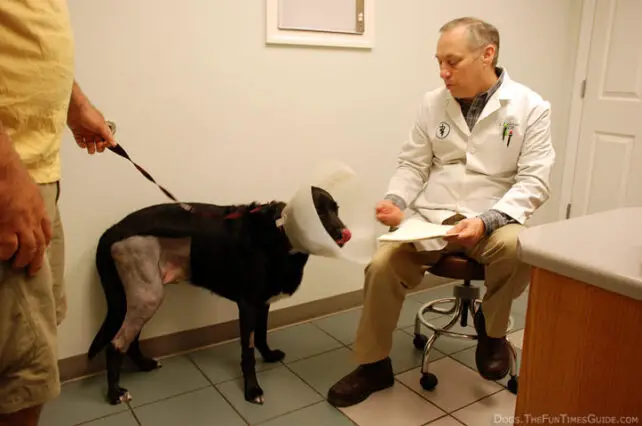
Dr. Beckman said that he was healing faster than most dogs, and he was also putting more weight on his leg sooner than most.

I think Tenor paid the price for that extra weight on his leg in those first days post-op, because his leg and ankle swelled up like an over-stuffed balloon just moments after we got him home.


tenor-dog-zonked-out.jpg


Here’s a little about our dog’s recovery from TPLO surgery, as well as the stories of other dogs who’ve been through it…


First, here’s how to prepare your home for a post-operative dog.


You’ll want to follow that advice and make sure you’re ready for him, and you’ve got things in order around the house.

Because once he gets home, all your attention will be on the dog 24/7.


Ankle Swelling Is Okay

Even though they warned us that the ankle would swell up, they didn’t warn us how much the ankle would swell up, and how quickly! It happened almost immediately after we got him home.

It looked like a golf ball sized tumor on the side of his ankle. And you could tell it was loaded with fluid. It was very sad.

But I guess that’s why he was on mega doses of antibiotics for so long too — to avoid the chance of infection setting in with all that fluid, in addition to his body getting used to that huge metal plate and 6 screws.
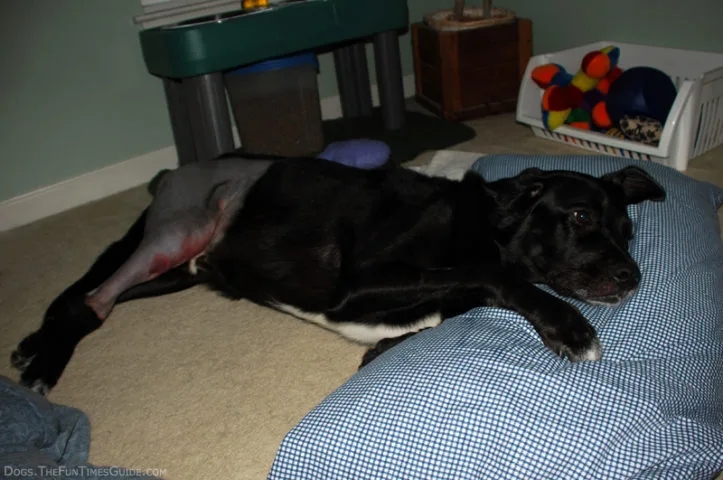
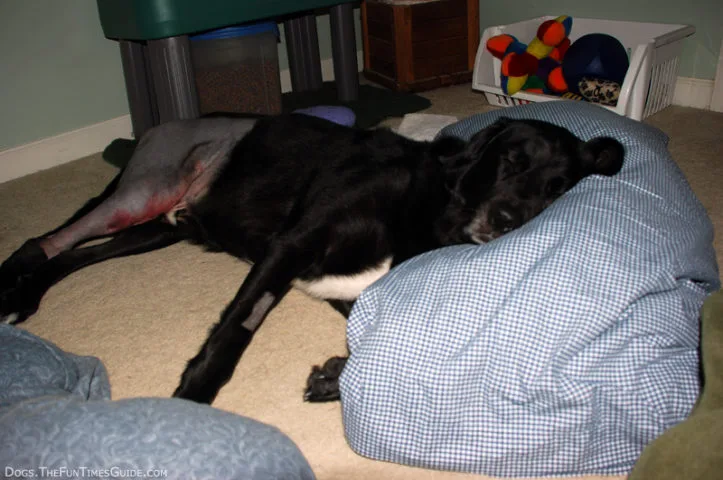
For the record, here’s what is normal after TPLO surgery, and what is not.


tenor-dog-wishing-away-the-pain.jpg  tenor-dog-resting-comfortably.jpg


The Bruising Is Atrocious!

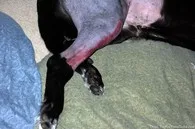
They also warned of a lot of bruising — which I generally think of as black & blue. Not in this case. Tenor’s bruising was bright RED… it looked like serious rug burns, if not fire burns. And speaking of burns, it felt really hot to the touch. It was clear there was a lot of fever and draining going on inside that leg. Hence, the heavy dose of antibiotics he was on for several days following the surgery. And the red bruising actually got redder and more noticeable over the next few days. Now, at the 7th day, most of the bruising is gone.

closeup-of-tplo-stitches-bruising.jpg  bruising-and-swelling-in-ankle-after-tplo-surgery.jpg


An eCollar, A Cast, Or A Wrap?

I would’ve thought that a cast or at least a wrap would have been required to “keep things in place” after the surgery, but no. Instead, Tenor was fitted with an e-Collar, post-op, and that’s how he greeted us when we picked him up. They said he had to keep the e-Collar on the first 2-5 days he was home. But we immediately took that off of him — ONLY because we know our dog really well AND we had our eyes glued to him 24/7 during those first few days.

I mean, I even slept (I use that term lightly) on the floor with him to make sure I’d know if he started licking his stitches or sore ankle during those first few nights he was home. (Thank God for those Thermarest sleeping mats that we use when we’re camping… came in really handy!) Our dog is one-of-a-kind in terms of doing what we say, and he knows that No means No. (Actually, he knows that “No Lick!” means “No Lick!”) Still, it wasn’t until his 5th night home that Tenor even thought of trying to lick his leg wounds — it must’ve been getting itchy as the hair was starting to grow back. (UPDATE: We used an e-collar for nights 7 through 12 post-op.)


the-towel-method-of-helping-dogs-up-stairs.jpg What About The Stairs?

We were worried about Tenor trying to use his sore leg to climb all the steps in our 2-story home.

Dr. Beckman showed us how to use a towel to lift the dog’s back-end as he uses his front legs to motor up the stairs. It worked like a charm.

By the 3rd day, Tenor was moving around well enough to tackle the stairs on his own — using only 3 legs, rather than 4. It was a cinch for him.


Should We Be Overly Protective Of The Dog’s Sore Leg?

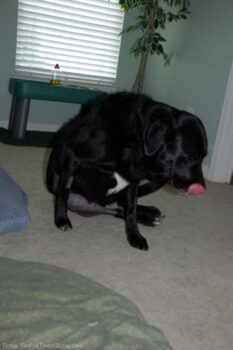
dog-bending-leg-after-tplo-surgery.jpg Doc says no, not really. They know what their limits are.

For example, it’s not a problem for a dog to lie down on his sore leg after TPLO surgery. Which is exactly what Tenor did. moments after we got home from the hospital — even with the knee and ankle swelled to their extremes — Tenor still would choose to lie down on that side of his body and sleep on that leg, on occasion.

dog-crouching-down-on-sore-leg.jpg It seemed painful to me, but he would inch down, as if to work through the pain — and he would slowly lower his body to the ground on top of his bad leg. He seemed fine once he got situated.

For the most part, he would usually lay on his left (good) side, keeping his right (sore) side facing out. But after lying around for hours like this, I think his left hip would get sore from having all of his body weight on it so long, and he would have to switch to the other side.

During those times that he was lowering himself down onto his bad leg, all I could think was: “All that fluid that’s building up inside that leg — mostly around the knee and the ankle — HAS to go somewhere. And each time he bent his knee, a lot of pressure was being put on those stitches. I vividly remembered the time our other dog’s stitches came loose and blood was leaking everywhere. But these stitches on Tenor held tight from Day One.

dog-lying-on-surgery-leg.jpg  dog-eating-ice-cubes-after-surgery.jpg


What About Pain Meds?

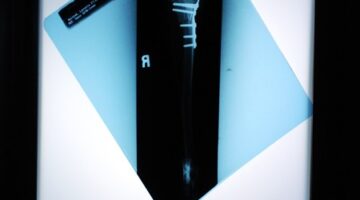
dogs-post-surgery-xray.jpgI asked the doctor about all the negative things I’ve heard about Rimadyl (and Deramaxx too for that matter, just not to the same degree).

He agreed there are definite downsides to using those meds — especially long-term. But our dog would only be on Rimadyl for 5 days, so there shouldn’t be much to worry about.

Dr. Beckman said the “sign” that something might be going wrong is if the dog won’t eat.

No problem there!


What Is A Dog’s Appetite Like After Surgery?

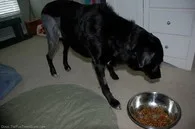
Our dog ate like a pig several times a day all through his entire post-op recovery at home.

I’m guessing that’s because eating was one of the few “fun” things he could do while still lying down and not putting any weight on his leg! Truth be told, we’ve never seen our dog eat as well as he did those first few days after surgery. (I’m also guessing he didn’t eat much those 2 days he was in the hospital after surgery.)
dog-eating-dry-food-mixed-with-wet-food.jpg  day-8-still-wants-his-wet-food-mix.jpg

Because I didn’t want to take any chances of him not eating (and I wanted to spoil him a bit for going through the surgery), I chose to feed Tenor his all-time favorite “moist” dog food, mixed in with his daily hard food (Nutro dry dog food – Lamb & Rice).

But, quite honestly, before I gave him pills, I’d make sure he had a bit of food in him first, and I would just offer him handfuls of the Nutro dry dog food. He ate it without hesitation — which, in itself, is very unusual, because Tenor has never been a big eater.


He Hasn’t Pooped Yet!

I did get worried there for awhile, because it had been several days, yet he still hadn’t pooped. (And I knew he had a TON of food in there!) He was peeing just fine, but he made no effort to poop while he was outside.

On the morning of day 3 at home (which is 5 days post-op), he finally pooped. Not much, and it didn’t resemble any poop I’d ever seen come out of his body before. It was slightly loose and very black — tar like. We presumed this was from the heavy doses of meds that had been forced into his body.

On the next morning (day 4 at home, 6 days post-op) came our reward — a long healthy solid poop! (If you’re a dog owner, you’ll appreciate the excitement of such an occasion.)

As it turns out, you shouldn’t worry if your dog doesn’t poop for several days after surgery.

dog-poop.jpg  dog-pee.jpg


How Much Activity Is OK?

While they say your dog has to be “kept strictly confined to a small area for 8 weeks” (yep!), and he should only be led outside on a very short leash 3 or 4 times a day for “eliminations”, Dr. Beckman said it’s really only those first 2 weeks that you need to restrict his activity so much.

After that, it’s just a slow healing process that the dog will adapt to on his own, and he will slowly start to put more weight on his foot as time goes on. He assured us that we could feel comfortable leaving Tenor in the care of someone else (if we had a trip planned or something) after those first 2 weeks.

In general, veterinarians would like to see the dog’s activity be restricted for up to 8 weeks, but it’s only those first 2 weeks that are really crucially important.

Turns out there are 2 different schools of thought with this. Some recommend no activity at all; others recommend slowly introducing activity within 48 hours of surgery, as a form of physical therapy for the dog. We actually took a middle-of-the-road approach with Tenor. After the first 3 days, we stopped trying to keep him off that leg. We figured he knew when it hurt too much and when he should take it easy. However, we didn’t let him run — though he tried a few times (and succeeded) in the backyard a few times. We immediately did our best to stop him.


How Do You Prevent The Dog From Going Stir-Crazy?

dog-resting-on-blanket-in-yard.jpg After 3 days of being home and cooped up in our bedroom — other than going out to pee & poop a few times a day (and tackling many flights of stairs each time!) — Tenor was thrilled to be able to stay outside for longer periods of time.

What we did was laid down a sheet on top of the grass. (I was worried about dir
t & infection near the wound.) We called this sheet his “bed” and he was happy to lie down on the sheet for awhile — just gazing into the sky and enjoying the fresh air. You could tell that he really liked the change of scenery.

One tip: If you decide to let your dog spend some time outdoors after surgery, secure a spot for him in the shade, as I would think too much sun on a fresh wound (and a hairless dog in those spots) could result in a doggie sunburn and additional pain.

Dr. Beckman warned us that there might be times when a sedative would be required to keep Tenor from overdoing it — too much too soon. I’m guessing this is commonly the case with young whipper-snapper dogs who are very active.  Doc gave us a couple of doggie sedatives, but I’m not crazy about using them. Only as a last resort, I guess.


Some Questions I Still Have

I plan to get answers to these at our next follow-up visit with the surgeon, Dr. Beckman.

1. Do I need to worry about him jumping up or down from high places (such as the back of our Jeep, our bed, etc) after he’s fully recuperated? (8 weeks or so)

2. Shouldn’t I keep a small dosage of Rimadyl or Deramaxx on hand in the event that his leg starts bothering him — like in the cold, winter months, or after he’s been playing hard or running? What about swimming?… the water is often colder than the air.

3. How long until he’s allowed to run again? (It’s obvious that one month after surgery a dog that’s had TPLO surgery is likely to still be limping… I’m guessing this is true for anywhere from 2 to 3 months post-surgery.)
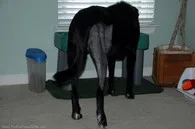
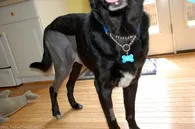
dog-is-eating-fine-walking-better-after-surgery.jpg  8-days-after-tplo-surgery.jpg


And Now For My Best Advice…

tenor-dog-happy-and-snacking.jpgOne of the best resources on the Internet regarding this type of surgery is Tucker’s story. Many of the links you see in this article refer to Tucker’s experiences. Hopefully, Tucker’s experiences, combined with Tenor’s experiences, will be of assistance to fellow dog owners who are going through the same thing with their dogs.

Here’s more about what things were like for Tucker the day of surgery and the night of surgery.

Follow the recovery process of Zeus, a 2-year-old Mastiff who’s undergone 3 joint surgeries. (There were a lot of bumps in the road. Poor guy…)

Here is Pocky’s TPLO recovery.

Follow Kodi’s post-surgery recovery after TPLO surgery.

Check out Nixie’s TPLO recovery photos.


UPDATE: 2 WEEKS POST-OP

Two weeks to the day after TPLO surgery, Tenor started putting weight comfortably on his foot. He only did it when he was walking slowly, and you could see that it was a trial and error period for him, but we were thrilled to see him start using it again!

I was beginning to worry about so much weight being put on his other (good) foot — for one month prior to the surgery and then up to 2 months afterwards with recovery — that’s a lot of extra weight on a single (good) leg.


UPDATE: 3 WEEKS POST-OP

At 3 weeks post-op, Tenor started running (relatively hard!) on the leg that had TPLO surgery. We put a stop to the running right away, but he didn’t seem phased by it — no pain.

Also at the 3-week point:

  • His fur is halfway grown in (half as thick as it should be), so he doesn’t look “naked” or “obviously shaved” anymore.
  • He likes to have the outside of the bad leg rubbed (hard). And, while you can touch the inside of the leg (where the metal pin is) and he doesn’t mind it, he is more aware of it. We don’t mess with that part of his leg at this point.
  • The wound is completely healed. There’s fur over the incision. No scabs remaining. No swelling. However his knee does look a little “bulky”. (Might just be an illusion since his fur has not grown completely back yet.)
  • He still doesn’t sit on his hind-end evenly — meaning, his bad leg remains less ‘bent’ than his good leg when he’s in the seated position. It’s as if he leans to the left heavily on his good leg, rather than putting much seated weight on the right side of his body when that bad leg is bent. He’ll extend the bad leg all day long, and even put a good deal of weight on it, but he’s much more reluctant to bend it in as tightly as his knee should (eventually) bend.
  • He thoroughly enjoys laying out in yard with the hot sun beating down on his bad leg for long periods of time. And since the fur has partly grown back, I’m not so afraid of sunburn anymore.
  • Ever since the 2-week post-op point, we’ve been taking Tenor on lots of Jeep rides. He’s buckled in to the back of our Jeep Wrangler (with the seat removed), so he has lots of room to walk around back there. Each time after a ride, he’s been more inclined to walk on his bad leg without hesitation. I think it’s a form of therapy –
    because he’s forced to lightly use it to balance himself when we’re turning, stopping & starting.


UPDATE: 6 WEEKS POST-OP

Tenor has been walking lightly on his TPLO leg for weeks now and he’s obviously putting more and more weight on it as the days go by.

  • You can’t even tell where he was shaved anymore — though the fur isn’t quite as thick as normal yet.  I think it’s that coarse undercoat that has grown in. It’s definitely not like his soft curly fur everywhere else.
  • He seems to be doing really well, however, I’m actually a little surprised that he’s not walking on it more regularly by now — seeing as he’s healed so quickly and smoothly, compared to most other dogs. Nevertheless, he chooses not to walk on that leg unless he’s only going a very short distance (one side of the bedroom to the other).
  • There’s no tenderness to the touch… at all. Just muscular tightness from not being used at this point. (That’s my 100% amateurish guess).
  • There is a definite bulge where the plate is on the inside of his knee. And there’s a bit more “chunkiness” (not puffy, but solid) to the knee itself, compared to his other knee. Then again, it’s hard to tell apples to apples, because there’s a lot more fur on the other knee. There is clearly no swelling or pain associated with the leg itself anymore.
  •  He loves to have his TPLO leg rubbed — fairly hard — from high up on the hip… down on the back muscle of the leg itself… and all the way down to the toes. (I’m still leery of getting any too near that plate though.) I remember one of my early “signs” that his leg would probably be okay was when he started stretching out the toes on that leg — because it felt so good to have that leg rubbed. Now, he frequently stretches out that leg completely on his own — without incident. And he’ll ask for more when you stop rubbing it.
  • Tenor will stand on his TPLO leg all day long — about 50% full pressure, only half of his actual “pad” touching the ground. But it’s obvious that he’s starting to rest more of the “pad” (rather than just the toe) on the ground as time goes by.
  • He definitely won’t use that leg if he wants to get somewhere fast though. It’s as if he’s pre-programmed to run fast in a 3-legged fashion now.
  • I’ve been taking him on Jeep rides since 2 weeks post-op and walking him on the leash (10 minutes tops) since 5 weeks post-op. Every time after a Jeep ride (where he’s standing a lot, sitting very little, and lying down some) he seems more balanced and confident on his TPLO leg, immediately following the ride. I guess it’s sort of forcing him to use it a bit. However, we don’t let him jump in or out of the back of the Jeep — it’s much too high for a dog with only 3 good legs.
  • That said, he started jumping back up on the bed (on his own) at about 3 weeks post-op — and we actually have a relatively high king-sized bed. He jumps back down on his own too — never putting weight on the TPLO leg in either process.
  • He’s obviously in no pain these days — even when he’s walked on it a bit, or (gasp) broken out into a full sprint now & then while chasing kids on the other side of the fence. That’s a big warning to those of you with a fence… even a tall privacy fence. If your dog is anything like mine, he becomes very curious whenever there’s movement on the other side of that fence, and that is the ONLY time he completely forgets about his leg. As mentioned in an update above, we’re talking full-out run on all fours. No evidence of pain, but you really shouldn’t let your dog do any serious activity like that until the 8 week point., so we stop his running immediately. Yep, 8 weeks is that magic number that we’re eagerly looking forward to.
  • The only thing I’m nervous about at this point is his other knee requiring TPLO surgery soon. No signs of it or anything, but the stats, and the fact that he’s been SO overusing the good leg for so long now are what worry me. Fingers are crossed that won’t ever be necessary.


UPDATE: 7 WEEKS POST-OP

We went back to the surgeon’s office for a check-up and x-rays today.

  • I was mostly concerned about the “chunkiness” in the knee area that I mentioned above (at week 6 post-op). I was afraid that maybe we’d overdone it a bit, letting him walk on it more than he should at this point or something. Doc said the bulging is merely tendonitis. It will likely flare up and go away, then come back several times throughout his life. It’s probably mixed with a bit of scar tissue as well at this point. Scar tissue generally shrinks over time. He said as long as there’s no obvious pain from all of the leg manipulations he put our dog through today, then it was nothing to worry about. (Tenor showed no signs of pain, although he typically has a very high tolerance to pain.)
  • He did say that it was slightly atypical though, as he usually only sees that amount of “chunkiness” in the knee at 2 weeks post-op, then it goes away. Tenor’s appears to be a case of tendonitis that has firmly set in.
  • Doc said Tenor needs 3 more weeks on restrictions (only leash walks in the yard, and no running), but the x-rays he took today show that Tenor’s knee is 90% healed at this point. He said the x-rays look good.
  • I mentioned how I was concerned that his leg was making a “clicking” sound often times when he walks. The doctor was able to replicate it twice (it sounds kind of like a rubberband snapping), but he said since he couldn’t replicate it with any specific movement of the leg, it was hard to diagnose at this point. I think he said the clicking is typically a tendon, but said not to worry about it just yet.
  • Doc also said since Tenor has healed so well and the x-rays look good, there was no need for us to visit the surgeon again for any follow-up visits. He’s well on his way to recovery.
  • I asked if Tenor would ever be able to jump up in the Jeep on his own again, or if we should try to prevent extra-high jumping on this leg for the rest of his life. He said nope, 3 weeks from today, Tenor can go back to doing whatever he wants to do — no restrictions including jumping at great heights. (Cool! Though I have to admit, I’ll still be quite nervous.)
  • Finally, doc said Tenor won’t be back to 100% normal until 4 months after his 3-week clearance date to run and play normally. It takes 4 months additional for that leg to get back into shape and rid itself of the muscle atrophy that has set in. However, Tenor doesn’t need to be restricted in any way during those 4 months. Good to know!
  • Right now, Tenor is sound asleep — sleeping off the pain. We just returned from this doctor visit, and it appears that the serious amount of manipulation doc put his leg through finally caught up to him… his leg is very sore right now.


UPDATE: 3 YEARS POST-OP

Tenor has done fabulously since his TPLO surgery 3 years ago! No problems with the bad leg OR the good leg since that day. The only thing we do differently now is give him daily supplements of Glucosamine & Chondroitin to protect those joints.

By the way, a lot of people have questions about the “clicking” sound that we all seem to hear at some point from the “good” leg. I’ve mentioned in Comments previously that the clicking went away. And it did. But eventually it came back… and then went away again. That’s when I decided to start Tenor on the Glucosamine/Chondroitin supplements as an added precaution. Ideally, we probably should have started the supplements sooner after the surgery – but better late than never. The clicking still comes and goes.

Lynnette Walczak

I like to help people find unique ways to do things in order to save time & money -- so I frequently write about "outside the box" ideas that most wouldn't think of. As a lifelong dog owner, I often share my best tips for living with and training dogs. I worked in Higher Ed several years until switching gears to pursue things I was more passionate about. I've worked at a vet, in a photo lab, and at a zoo -- to name a few. I enjoy the outdoors via bicycle, motorcycle, Jeep, or RV. You can always find me at the corner of Good News & Fun Times as publisher of The Fun Times Guide (32 fun websites).

More Posts - Website

Find me here:
TwitterFacebookLinkedInPinterestGoogle Plus

  • Matt

    Thank you for this post on the website. We’re finding that our 80-lb Lab mix, which just had surgery this past Thursday, is having a similar post-op experience and pray for a complete recovery. It is relieving to read. There is one thing I cannot get out of my head after seeing the post-op x-ray though – a drill bit broke off in our dog’s bone and was left there by the surgeon. I am assuming it was difficult to get out and/or could create more damage by attempting to remove. The surgeon made it seem like no big deal, short or long term, but…..has anyone else had this happen to their dog? If so, what were you told? Logic tells me that we agreed to let the surgeon do the surgery which requires 5-6 metal screws, so this should be no big deal, but hearing that this happens 5 or so times per year (according to the surgeon, who may do upwards of 100 TPLOs per year) is still concerning. Anyone have a similar experience?

    • ReneePO

      I am also searching for people who have been through this! This just happened to our dog last week at a reputable college vet hospital. At first they lied and said everything was fine and there were no problems. But over 24 hours later, they called and told us about the broken drill bit, which was also left in.The vet refused to take responsibilty and or blame the drill or drill bit and just repeatedly stated that it is rare, but “just happens.” Then they told us the price of the surgery was double what was given as the estimate, but didn’t tell us why. It only got worse from there. The dog ended up with a staph infection, which apparently “just happens,” as well. A day or two later, he ended up with bloat and needed emergency surgery for that. They have told us lie after lie and have contradicted things they have said and what each of them has said to us. I feel all of these problems are related based on the research i have done, and they should take responsibility, but they won’t. I am sure the bill is going to be enormous. Wish I had done more research and tried an alterative before doing surgery and wish I had chosen a different hospital.

  • Craig

    Our two year German Shorthaired pointer mix had to have both knees done. One at 21 months, the second at 2 yrs. (3 mios apart). The vet and surgeon said it was inevitable that the second one would require it given the genetic structure of her knee. We had been warned that TPLO was probably in our future back when she was a year old. So when she came up limping at 18 mos we bit the bullet and planned to do both over the course of the winter. She is now 12 weeks post op from the second one and doing great. You’d never know she had the surgery.
    Keeping her confined all this time was tough, especially for my wife since I travel for work and we have another dog.
    She is now getting out for more walks and goes back for her final x-ray next week. My wife was great and devised a bunch of mental things for her to do in the house in confined spaces. She devised a plastic tube with a hole in it that the dog could roll aroud the on the carpet and kibble would drop out once in awhile. She made a board and attached objects to it and worked on training her to touch each object on command. She researched other dog tricks that she could teach her, like when we say “what stinks” she puts her paw over her nose while laying down. These mental tricks helped a lot and actually helped settle her down. We also took her swimming a few times a week at local places that had indoor pools for dogs. It wasn’t bad price wise. About 10-17$ per session depending on the place. It was cheaper then the actual hydro therapy that you can get which can run 50-75/session.

    I expect by mid-summer she’ll be back at close to 100% once we build her muscles back up. That has to be slowly since they haven’t hardly been used much the past 7 months. I’m more worried now that she’ll pull or strain a muscle from over use. So we’ll work her back gradually. I’m happy so far!

  • MB

    So you’re saying 8 weeks’ recovery time. Everything else, including my surgeon says 16 to 20 minimum weeks’ recovery time. Overall I find this site very helpful but I am concerned about that discrepancy and think that it’s important for people to know that 8 weeks may not be what they and their dog will experience.

    • Amanda

      I think everyone should listen to their own vet and take all of the other experiences as a guide. We have had two different surgeons for our Lilly’s two different legs and they have each had their own opinion. For the most part what you read and hear is going to be on the cautious side and it is true it takes about 6 months from the surgery to be full out recovered muscle and all.

  • Julian

    Thanks for the info… I am on week 5.5 now and it has been a brutally long process.

    • http://thefuntimesguide.com/ FunTimesGuide

      I hear you, Julian. The recovery process seems to squeak by so slowly. But it’s sooo worth it in the end. After your dog has completely healed and has the freedom to roam and be himself again, you’ll feel great knowing that the surgery was the best thing for him :-D

  • MB

    Thank you fro the tip about taking the dogs outside during recovery. My guy, an American bulldog was very active pre-surgery. He does not play with toys a lot but we used to take 2 hour walks sometimes. He is so bored being leashed and crated inside. I do take him out on our deck. I go along, keep him leashed, and sit with him. Seeing the sky, birds, feeling the breeze helps him a lot. Before I started doing that, we’d take him to our side yard. He’d make his way to the gate and sit there, waiting to take a walk (which we did not do).

    • http://thefuntimesguide.com/ FunTimesGuide

      I agree with you, MB. Each dog is different and needs to get some form of stimulation daily in order to combat boredom and anxiety from being cooped up and restricted for so long. Sometimes just a little sunshine (in a confined area) will fit the bill :-D Thanks for sharing!

  • Derek

    Thank you, very helpful!

  • Mateo and Jill

    Hello. I have a mastiff that just had TPLO. He had surgery on June 10th and was putting weight on his leg right away. Just yesterday though he stopped. I see that your dog did the same thing. How long did that last? Do you think they just over did it and need a few days to settle back down and ‘recover’ more? Mateo is going to start water therapy this week to help him get back in shape. Any information you can provide would be great.

    Thank you!

    • http://thefuntimesguide.com/ FunTimesGuide

      @Mateo and Jill – Yeah, it’s still REALLY soon after your dog’s surgery, so I wouldn’t worry about Mateo not putting weight on his leg fully just yet. I can’t remember exactly how long it lasted with our dog after surgery (I think I left a comment about it on one of these posts back then). I seem to recall brief phases of him not using it, then using it again. It never lasted very long at a time though.
      To answer your question… yes, my guess is our dogs just overdid it too much one day and their bodies were naturally telling them to take it easy for awhile :-D
      How exciting that your Mateo gets to try water therapy! That sounds like a really soothing way to get back up to speed even faster. *Hugs to Mateo*

      • Jill and Mateo

        Thank you for your super fast response. It just seems weird that he was putting a lot of weight on it and now is not. The vet didn’t seem too surprised. I just hope we didn’t let him do too much. It’s hard to keep him confined and not let him out to do all the things he normally does. Well hopefully in the next day or two he will start using it again. We also haven’t used very many pain pills b/c I was worried about the side affects. Mateo never showed any signs of the cruciant rupture initially and the vet was amazed at how well he could walk despite the rupture pre-surgery. I have second guessed myself about having done the whole surgery seeing how much pain he seemed to be in initially. Well please keep your fingers crossed for us and yes we are super excited about water therapy. Hopefully it helps him get back to normal soon. Thank you. Your blog is very helpful.

        • http://thefuntimesguide.com/ FunTimesGuide

          @Jill and Mateo – I know, it’s like we notice every little thing during the early phases of recovery from the TPLO surgery. I certainly did :-D Your vet sounds much like mine — he was always WAY too calm about things in my opinion. (The surgeon was too.) But you have to remember, they’ve done hundreds of these surgeries, so it would have to be REALLY out of the ordinary in order for something to seem “bad” or “wrong” to them. While their laid-backness kind of bugged me at the time (I was FREAKING out!), looking back I can see that my concerns really were trivial in the whole scheme of things. (It’s just that this is the first time that people like you & me are seeing our dogs behaving this way. So everything is strange… unusual… and like it might signal that something is “wrong.”)
          That’s my best piece of advice for all pet parents going through this surgery with their dogs – trust your vet’s expressions and opinions. They’re the experts.
          Like you, we also didn’t use very many pain pills. The vet explained what to watch for, so we judged our dog’s pain based on that and how well we knew our dog’s signs & signals.
          P.S. I’m thinking the bigger the dog, the more weight they’re put on that “healing” leg — so it becomes very noticeable to them (after the fact). That’s probably why our larger dogs stopped then started using their healing legs again and again. Too much too soon — it’s very hard to prevent. Congrats on taking such great care of Mateo thru all this! Have fun with that water therapy :-D

  • Denisesandler

    Hello. My 2 year old mix breed just had her staples out today two weeks after the TPLO surgery. Since she had her surgery, she has not been left alone at home at all. Either my husband or I has been home with her. She’s an “excitable” small dog and she likes to jump up on people which we’ve both been very worried about. Did you leave your dog alone at all? And how did you confine him? We tried to crate train our dog when we first adopted her, but that never really took. Thank you.

    • http://thefuntimesguide.com/ FunTimesGuide

      @ Denisesandler – we actually didn’t leave our dog alone until a couple weeks after the surgery. And then, only for very short time periods. When we did leave him alone, we put up a baby gate and confined him to one room that he was most comfortable in (our bedroom). For some dogs that will work fine. (Our dog is pretty mellow.) Other dogs need a crate for confinement. Crating never happens “easily”… and I’m not sure the right time to try it would be in the midst of other “chaos” such as surgery/recovery. I guess I’d recommend trying the baby gate method. Perhaps confining her just to a bathroom would be best?…

  • hazel’sMom

    Our 8 year old chocolate lab just had TPLO surgery 4 days ago. Today I notice a big red bruise and freaked out about the color and size. Your post calmed my fears that something was wrong. Matter of fact she is acting exactly like Tenor in almost every way…she is a very mellow dog. However, I am still concerned how we are going to make it through this without her going stir crazy once she feels better.

    • Aheacker1

      We found the most fabulous toy at Pet Smart …it is a blue roundish toy and has chew inserts…Lilly our 70lb Lab loves it and spent hours just nawing. This was our second TPLO and we made it…YOU can do it!

  • Thuttonwv

    Hi. Our English Bulldog had surgery a few days ago and his swelling is similar to what you indicated. Our surgeon told us we needed to use warm compresses to get the swelling down but the dog will nto allow this. He is very sensitive and will nto allow us near the injured leg. Any other ideas or thoughts on how to get heat on the area.

    • Denise

      Hi. My dog had her surgery on 7/13 and we used cold compresses. It helped the swelling, the pain and her healing. We used gel paks that you put in the freezer and wrapped a towel around it and then applied to her leg. I would try cold, it might “feel” better to him. Good luck – it’s not fun, but each day it gets a little easier.

    • Aheacker1

      We honestly didn’t use heat or ice and our baby did fine. It was more trouble for her if we tried it.

  • Eichhodv

    Thank you so much for sharing your experience. As a parent that just went through TPLO, it is really good to know what to expect, what we can do, what should be considered a red flag, and that we don’t have the first puppy that has gone through this.

  • Digger151180

    my dog a very tall rottweiller who was 60kilo’s and nearly 3year’s old had tplo surgery back on the 25th feb 2010, he started off so well within 3days he was using the leg again even the vet was amazed how quickly he’d recovered but after the 3rd day he went down hill rapidly his whole leg swelled up so much that I was panicking, it took an hour for it to swell so much that it no longer looked like a leg I rang the vet emergency line and rushed him in at midnight, as I got to the vet his leg burst open and blood and puss was streaming out, they put him on very strong anti-biotics and told me to get him up and walking for 5mins every hr then put him in the shower and wash his leg with cool water to give the effect of a massage, his leg didn’t start to go down for several days. After 6wks i took him back to the specialist for further x-rays to make sure he was healing fine but when i got there they were so concerned with how his leg was turning out wards when walking and that it was still swollen they asked if they could keep him in, as it turned out the x-rays looked good but his bones had already grown arthritic in 6wks which isn’t good, they put a needle into his knee to take a sample of the fluid, it turned out the antibiotics he was on were not the correct ones so we started another course which would last 11days, 11days later he’s still swollen so another 2wks worth were issued, after the 3rd course of antibiotics his leg finally looked normal but his knee was now clicking twice with each movement and was turning outwards when walking, he’s not really putting any weight on the leg and when standing he’s only standing on 3legs, ive taken him back every wk for a check up but he’s not improving so they told me he had to lose weight to stand any chance of recovering so i put him on a senior light food which cut his weight dramatically, he now weighs in at 51kilo’s so he’s lost alot but even so it was the beginning of august and he’s still not really using the leg he’s hardly putting any weight on it and when standing he’s only using 3legs. he’s been on the maximum amount of previcox (pain relief) now solidly since the 25th feb, and when he’s really bad i give him tramadol, his insurance has now maxed out at 4000 pounds ive had to pay an extra 250 pounds but there is still alot more that i haven’t paid for yet (how much, is what i don’t know) the problem is how much longer is it going to take until he’s able to use the leg properly? if im late feeding him his food with his previcox (pain relief) he cant use the leg at all! my vets answer to this was to put him on a specialist vetenarian diet and said he has to lose another 5kg and walk him for longer than I currently am (which is 20mins twice a day, not a lot because any longer than 20mins he starts to come to a stand still so he’s obviously telling me he’s had enough, if I try and encourage him he’ll put his head to the floor) and to also start light hydro therapy the new diet is going ok he’s lost another kilo and he loves the hydro therapy side of things as he loves swimming but he’s still not getting any better. Its now the 18th august 2010 so it’s almost at the 6mth mark and still he is not putting much weight onto the leg, ive increased his walks to half an hour but he’s just walking slower and slower and if we come to a kerb normally he’d stand and wait for the traffic to pass then cross the road, now he sits and waits for the cars to pass. If I spot someone I know when out walking they always stop to ask how he’s doing, normally at this point he’s getting impatient and wants to walk on but now he lies down to wait, normally I’d be really happy he’s being obedient but he’s not doing it to impress me
    At home he’s becoming restless and has started to bark a lot which he never does, he’s barking at butterflies going past the window or at things on the tv I’ve tried giving him mental stimulation with kong toys and raw hides plus knuckle joints but he can’t have them too frequently due to him trying to lose weight, I feel helpless.
    When do we say enough is enough? I love him to bits but its killing him mentally and its upsetting me watching him I just can not see him getting better, he seems depressed most days, amputating the leg is not an option as when he had the 1st lot of x-rays they did both legs and the out come was his other leg could go the same way at any time now if it does go ill have no other option than to humanely euthanize him

  • Aheacker1

    Hello all,
    Just wanted to update on our Black Lab furbaby Lilly’s 2nd TPLO – I think we had the most fabulous surgeon ever and the most resilient baby! She had her first TPLO May 29, 2010 and her second June 5 this year. She is now completely healed and has been released for most exercise. It has been a trying two summers of staying with her constantly but was worth every second to see her run again.

    A few things that really helped us out were 1. Putting a sign on all doors inside of a plastic sheath that said Please do not knock – call our home and folks did. We also found a new great gnawing toy ….I don’t remember the name but it is a blue ball type deal with a treat that really does last a long time. She didn’t throw it around at all just sat and gnawed. Also, water therapy did wonders for her.

    Thanks for such a great informative website I have visited often through both TPLO’s.

  • SPA

    My 7 year old, Kayla – an australian shepard/corgi mix (a very long, furry, low rider) will be having surgery this coming Tuesday. I found you post while doing research. You story and others are very inspiring, but I am still worried and scared.
    One concern I have is getting her home – I was planning on putting her in her “crate/kennel” while we were at work, and at night (because she sleeps with us on the bed – we only have the kennel from when she first came home from the rescue to help with potty training). Should I re-think this? No one else seems to have confined their child so much. We do have an office/bedroom with no furniture she could stay during the day and not be cramped. But at night, the only other option may be getting one of those pens to set up by my side of the bed so she is still with us (we fortunately live in a rance house with no steps).
    Could you tell me what you think about the “crate/kenned”????
    Thank you for your inspiring story – it has helped with a lot of my anxiety.

    • http://thefuntimesguide.com/ FunTimesGuide

      My advice would be to not over-think it. :-D

      I say that because Kayla herself will largely dictate what you do and don’t do in the hours, days, and weeks following surgery. All dogs are different.

      Like you, I initially thought the crate was the best way to go when our dog was left home alone. As it turned out, he was pretty mellow and didn’t really need to be confined — so we opted to leave him in our room with a babygate blocking the door instead.

      Plus, if your dog has an ecollar on (to prevent licking/removing stitches/staples), then she probably won’t fit comfortably inside the crate.

      And, if your dog hasn’t been confined inside her crate in a long time, that may (or may not) create more stress for her than it’s worth.

      In some cases, I think the open pen you mentioned placed near the side of the bed might be a good idea. Definitely try her out in the crate (or pen) a few days before surgery, IF you think you might use them after surgery.

      My gut instinct is that few people end up confining their dogs in crates immediately following surgery. That’s not to say that you SHOULDN’T though… each dog is different and your dog will largely dictate what actions you take in the days after her surgery.

      Best of luck! Keep us posted on how Kayla does after surgery :-D

  • SPA

    Well Kayla made it through the surgery. She has 10 staples to hold the “cut” together. There is the bruising – and yet, its red. She did not get the ankle swelling until the day after, just a little. Today it is the golf size ball – - – and full of fluid. The ortho said warm compresses. Did you use them? How often and how long it this swelling going to be? How “big” is “big” for the ankle?
    BTW – no kennel. She is using the office during the day (of course I am home until next monday) and we put the mattress on the floor so she could sleep with us in the bed at night.

    • http://thefuntimesguide.com/ FunTimesGuide

      Yay! she’s on the road to recovery :-D Sounds like you’ve got a good handle on the pain & bruising issues. The swelling is the one thing that completely threw me for a loop — especially since it didn’t happen til 1-2 days after our dog got home.

      We didn’t do anything for the swelling, but had I known the warm compresses were recommended, I certainly would have done that. When I asked the surgeon, he said the swelling was “completely normal and nothing to worry about.” (I still wish he’d recommended compresses.)

      I’m so glad to hear that you’ve got a set-up that’s working for Kayla – no kennel, office during day, and mattress on the floor. Sounds PERFECT!

      *hugs to Kayla*

  • Thuttonwv

    Did the noise Tenor’s leg was making (clicking/rubberband snapping sound) ever go away? Did you find out why it was making that sound. Just 4 weeks after surgery, our dog’s leg is making the same noise.

    • http://thefuntimesguide.com/ FunTimesGuide

      Thuttonwv – Yep, it sure did. That clicking sound went away a few weeks after – I can’t remember exactly. It was never constant though — it was off & on. Like you, I was terribly nervous about it. When we took him back to the doc, he couldn’t replicate the sound — even though it still continued at home. Fortunately, it was just temporary. I would have your doc try to replicate it the next time you visit… Or, if it continues for WEEKS, then I’d make an appt to have it looked at.

  • Ann G

    Did your dog have an unusual post-opt infection? Or was that considered normal? My dog had a TPLO but had nothing, and I mean nothing like the swelling or red burn yours had. Nor was mine on post-opt anti-biotics. Thank goodness I didn’t see your post before his operation or i might not have done it! Our only problem was keeping my still frisky dog confined. I am shocked by what your dog went thru.

    • Thuttonwv

      Ann,

      I think the antibiotics are preventative. My dog has had three surgeries (TPLO, hernia, and entropion). Each surgery, he was placed on post-op antibiotics as a precautionary measure. I believe the thinking is that they are exposed during surgery and want to be proactive about infections that could potentially be very serious.

  • x Lauren x

    My dog Harvey is a St Bernard and has just had TPLO surgery on his leg for the second time. He was operated on when her was one due to the cruciate ligaments breaking in his right back leg and unfortunaetly now two years down the line, the left leg has now gone. He was operated on Monday 11th Oct so 4 days down the way and his leg is bruised and battered looking and swelled terribly. We did not experience this with his reight leg. Like you say in your blog, the bruising is not black and ble but bright red! We are also noticing that his leg is clicking when we take him to do his business in the garden, it doesnt seem to bother him but it worried me. The vet has said to give it a few days but i am on egg shells. Did you experience any thing like this. The bruising is woorying enough witout the cracking sound on top!! Thanks Lauren xx

    • http://thefuntimesguide.com/ FunTimesGuide

      Hi Lauren – Yep, our dog experienced the EXACT same things as yours after the surgery — the bright red bruising and the clicking sound. Like your vet, ours seemed unconcerned. The bruising especially, he said was completely normal. And the clicking he said should go away in a few days or weeks. It eventually did. (It seemed more like weeks than days.)

      I’m so sorry that you and your dog have had to go through this twice. I cannot even imagine… *hugs*

  • x Lauren x

    Thank you for replying so soon. Its is a relief that i am not the only one who is/has experienced this, as awful as it is! I was so worried that these abnormalities would lead to even more surgery. His first op two years ago was bad enough but he sailed through it in comparisson. Fingers crossed Harvey makes a good a recovery as Tenor. Thanks again, L xx

  • Ann

    I can’t tell you enough how much all this information has helped me. My cocker had the same surgery three weeks ago. Even though the vet went through all this with us, reading your article has helped me tremendously. Thank you so much for posting this – this has been so helpful. Almost every day I wasn’t sure if my dog was having a normal day, but after reading about your dog, I know my dog is doing fine. Thanks, Thanks, Thanks so much!!!!

  • DAT

    Thank you so much for your story. My dog and your dog look like twins just had the surgery and her ankle also filled up with fluid and I was thinking what is going on here.

    Thanks again.

    D.A.T.

  • Kbell

    Thank you for this – Wally is now five days post op and he is now feeling better, which is great, but I can see it is going to get harder and harder to keep him from charging about. This has been very helpful

  • Margieg14

    This is a very informative guide. We, my dog,Mocha, and I are almost 4 weeks out from her second leg surgery. Things are going well and are somewhat different the second time around, the other leg this time. She did overuse her leg Christmas eve when we drove 4 hours to be with grandkids Christmas morning. Christmas day she was lethargic and her knee was warm to the touch. I called and the vet said to give her one buffered aspirin with some food, since we did not have any thing for inflammation with us. I have been really careful to restrict her activity and she is doing super well.

  • susanbarratt123@btinternet.com

    Coco my choc lab is on day 3 post op. This information has taken so much fear and stress away and I thankyou with all my heart for taking the time to post it. I saw the bruising and the swelling today., went into panic mode whilst the vet said ” don’t be too worried” and left it at that. This page is now on my home page and will be used as my guide x
    Best wishes
    Love coco & sue

  • Queenderry32

    Thank you for taking the time to write this, I enjoyed the pictures also, it has helped getting us prepared for this experience, we have a 93 lb great dane, he cant loose any weight so i know we cant go the diet route, he is 4 1/2 yrs old and the best family pet you could ask for, not sure how we are going to afford this but he deserves to be taken care of.
    you covered alot a ground answering many questions for us thank you again.

  • Jml7021

    My dog, Alexis had to have TPLO surgery 2 years ago and at that time I searched the internet to find as much information on this surgery as I could and thanks to Tenor’s owners and several other dog owners’ accounts of their dog’s surgery I was able to gain the information necessary to assist my dog in recovery of her surgery. Thank you all so much, when one is faced with an expense such as the TPLO surgery, you want to have some confidence in the results of this surgery before putting your dog through it, and two years later, when I see my dog run and play with her brother, I know that I did the right thing and the $4000 + that this surgery cost was well worth every cent to see my dog play without the pain that she had prior to this surgery. Thank you again for your informative posts.

  • Stephanie

    Thank you so much for making all of your experiences available for us to read. We are only on day 2 of post-op, and I already have many of the same concerns as you did. I definitely feel better after reading your site. You have helped tremendously. Thank you again!

  • Tracy

    I just found out today my 3 year old lab has a torn ACL. I’ve been reading online ALL day! Thank you for posting this. I can’t say it makes me less scared for her, but it’s good to know Tenor has done so well and I hope my Ammo does too!

  • Kim Pre

    Thank you for posting this! My cairn terrier just had knee surgery yesterday and this evening his bright red bruising started coming out! It freaked me out so much and I came across this site after trying to google if this coloration was normal! I really appreciate the pictures and helpful recovery story!

  • Ajmccool72

    Did he by chance have any troubles with the good knee in the year post op?

    • http://thefuntimesguide.com/ FunTimesGuide

      Ajmccool72 – Nope. Here it is 3 years later and he’s had absolutely no problems with the good knee post-op. *knock on wood* :-D

  • MW

    Thank you for posting this with photos. We’re on week 5 of recovery of our 10 year old German Shepherd’s TPLO. While the vet gave us basic instructions, we weren’t prepared for the bruising, swelling, not pooping, etc. Your blog addressed all that, so we weren’t AS worried. Thanks again for taking the time to post your experience.

  • Laura2002_99

    Your post was very helpful. I have a 3 year old Weimaraner who just had leg 2 repaired for a torn ACL she is on day 3 post op. the first one did not bruise at all but this second one is all red and bruised. She had the basic repair done on both legs. About a month after the first one was done she started acting funny on the other one and sure enough she tore the other one while she was recovering from the first operation. Being winter did not help at all and the fact that we have stairs to go outside. I would recommend to anyone who has stairs the dog has to use to go out to potty, find a way to put up a ramp it is much safer. In my experience with Peyton I would recommend going straight to a vet that does the operation, i went to my regular vet and it cost me a fortune and she told me my dog was fine 3 weeks later i took her to a surgeon who told me no its tore, so when the second one started acting up we took her right back to see him and now we are just waiting patiently till she can get her staples out in 10 days! Thanks again for the great posting you did the pictures are great made me 100% confident that the redness i saw was for sure bruising.

  • Debi DeCecco

    My golden retriever had an awesome outcome with this surgery. She went from barely walking to a 4 year old with good behavior. She must have realized she could not jump onto our high bed, but limping was gone. She can run and walk without a limp.

    I am asking about a long term issue. Now she has a very tight back that leaves her very slow without massage therapy (I give her heat and massage the best I can do) and thinking, this is due to the fact that she lived 6 years with her spine at one perspective, and with the awesome correction, her muscles are having a hard time compenstating.

    I want to know if anyone else had noticed this, or perhaps ‘Chelsea’ is unique, as she just is.

    I would love to hear about any similar issues. We spent the $, for 2 surgeries, and we feel it was worth it. And, for new pet owners, pet insurance is worth it if you get is when they are babies!

    -Debi

  • Carlos

    This Posting was a ton of info!!  My Red nose pit bull is on Day 3 of Post Op TPLO Surgery!!  She Had Her left Leg operated on about 8 Months ago and now her Right leg!!  A lot of us worry about our Dog like it our Child!!  It’s Funny how we will do anything for our Four Legged Friends!!  The recovery time could give u more stress and loss of Sleep But it is Well worth it!!  Dogs Give so much Joy and i didn’t think twice about the Costs!!

                                                                                                                            Thanks Again!

                                                                                                                                                 Carlos-

    • http://thefuntimesguide.com/ FunTimesGuide

      Carlos – wow, so sorry to hear that your dog had to go through this twice in such a short time! Sounds like she’s in good hands. Fingers crossed for another speedy recovery :-D

  • Brandidickson84

    thank you for this post!!! my dog India had CCL surgery last november 17th … and I am constianly worring abut her as she still has a limp but the vet said she would never be 100% again as she had the ccl rupture for almost a year before she got it fixed and they also said there were alot of bone spires and she has some arthritis… i still worry about her running though so i try and stop her when i catch her … again thanks for the info !!! :o )

  • CherylVT

    Thank you for compiling this site. It has allowed me to calm down a bit because I was so unsure what was OK and what was not. My 2 1/2 year old Golden, Cooper seems to be following the same healing path as Tenor. It has old been 3 days since the surgery but I was worried about the massive red bruising, ankle swelling and lack of defecating. Reading your post have put my mind at ease a bit to know that this seems to be normal. Although Cooper is going to Dr’s today because it seems like the staples are rubbing on his genital area causing some red irritation. Did you happen to have this issue too? 

  • CherylVT

    Thank you for compiling this site. It has allowed me to calm down a bit because I was so unsure what was OK and what was not. My 2 1/2 year old Golden, Cooper seems to be following the same healing path as Tenor. It has old been 3 days since the surgery but I was worried about the massive red bruising, ankle swelling and lack of defecating. Reading your post have put my mind at ease a bit to know that this seems to be normal. Although Cooper is going to Dr’s today because it seems like the staples are rubbing on his genital area causing some red irritation. Did you happen to have this issue too? 

    • http://thefuntimesguide.com/ FunTimesGuide

      So glad you’ve found this site helpful, Cheryl. It can be really scary — especially if your dog has never gone through anything similar before (mine hadn’t). I think taking Cooper to the doctor for the staples/irritation makes sense. I’m sure I would do the same thing. Plus, you can get some extra reassurance on all the other “little” things too :-D

  • Dom

    Thanks for your website. Our dog just went through TPLO about 5 days ago. You answered a ton of questions I had

    • http://thefuntimesguide.com/ FunTimesGuide

      So glad I could help a little bit… It’s a challenging thing to go through, but worth it in the end. Best of luck through the recovery phase. If you think about it, post an update soon to let us know how your dog is doing :-D

  • Dom

    Hi,

    Our chocolate lab, Brandy, had TPLO surgery on 09/7/2011. Today is day 7 post-op. She started walking on her leg yesterday. We use a belly sling to help her along, however she is putting weight on the left leg where the surgery was done. She is also navigating the three front stairs going into our home. We have her on an dog orthopedic  bed in our living room and her crate is also near by. So far so good. She is a laid back dog & we have had real success with her confinement. Brandy has adjusted well and is starting to act like her old self again. We take her for stitch removal next Tuesday & we will be meeting again with the vet technician & surgeon. As of today there is no swelling or bruising on her left leg. Right now her potty walks are limited to 5 minutes each  but she is walking to & from the house.

    Thanks again for your web-site, it was a great help.

    • http://thefuntimesguide.com/ FunTimesGuide

      Thanks so much for sharing your experience, Dom. Sounds like Brandy is doing great after her surgery. It’s a slow process, but worth it for sure! So glad she didn’t have any of the bruising or swelling… 

  • Cassierose

    Hi,

    I just wanted to thank you for such an informative page. Tenor is a very lucky boy having such a caring parent. My boy Zeus is 5 weeks post op and through your page I feel much more confident and informed.

    Reagrds

    Zeus’ Mum

    • http://thefuntimesguide.com/ FunTimesGuide

      Thanks for the kind words, Cassierose! Best of luck during Zeus’s recovery days :-D

  • Jrubino29

    My Belgian Malinois had TPLO surgery on her right leg 2 years ago and the specialist did say that the other leg sometimes goes in 2-3 years… well 2 years and her left leg went. We just had TPLO surgery on this leg 3 days ago. I came upon your article to refresh myself on the recovery. Thanks for the refreshment! 

    • http://thefuntimesguide.com/ FunTimesGuide

      Awe – I’m sorry to hear that your dog had to go through the surgery AGAIN. I’m sure all the photos and tidbits above brought back a flood of memories of your first time through it. Hope she heals quickly. *hugs*

  • Casey Clark

    Our dog Ace had his first TPLO surgery three months ago. Unfortunately, he tore his other leg just before Christmas. We have his second surgery scheduled for tomorrow. I would like to thank you for your post. The recovery was grueling on our dog and us, and it was nice to read your posts and know other people are experiencing the same event with their loved ones. Ace, our six year old pit bull, starting putting weight on his surgery leg the next day. The swelling and bruising made me the most uncomfortable. Ace’s ankle was the size of a tennis ball. As I embark on this emotionionally strenous adventure again, I am thank full for all the comments of other dog lovers. Thanks!

    • http://thefuntimesguide.com/ FunTimesGuide

      Hi Casey – I’m sorry to hear that you’ve had to go through this process TWICE… and so soon. I can’t imagine how difficult that must be — because I know how tough it was for us to go through it just once. Hang in there! I’m so glad that our experience and the comments of all the others here have been helpful for you during this time. We all wish you and Ace the best as you prepare for his second surgery. ♥

  • Venny54

    my bully girl is due to have surgery soon….iam just curious…did any of you dog owners work during the recovery stage…we you able to leave your pet kenneled for a few hours to do things outside of the home? grocery shopping etc?? I realize that ones social life is going to change drastically for a while and I dont mind…unfortuanatly my husband will have to travel and will be gone for three weeks and I will be dealing with this on my own…so i was just wondering just how confined to the house will be for the first couple of weeks.
    p.s. iam sooooo apprehensive about this surgery…our little bully is such a moose and so active..iam concerned about her mental well being through all this….how do i keep her occupied once she starts to feel better?

    • http://thefuntimesguide.com/ FunTimesGuide

      Hi Venny54 – I hope others will reply with their thoughts as well. Here are mine…
      I was fortunate and able to stay at home with my dog the entire time he was recovering. (I work out of the home.) You will definitely be able to leave the house long enough to go grocery shopping, etc. Short trips away like that will be good for you AND your dog – just a slight change of pace will help to get your mind off the stress/frustration. (Your dog is keenly aware of your emotions too.) As for keeping your dog occupied once she starts to feel better… don’t over-think it. Things will come naturally to you… and to her. Simple things like frozen treat toys, stuffed Kongs, *brand new* toys & treats introduced daily (while she’s in a confined space). Little things like that will go a long way toward taking your dog’s mind (and yours) off of her leg for awhile. Even things like moving her crate from one room to another (like closer to where you are or near a TV) could be a nice change of pace. I would just try to keep your dog as confined as possible for as long as possible — it varies for everyone’s own situation.  

    • Casey Clark

      Venny54, The first few days I did not leave my dogs side. I was enrolled in school at the time, and after the three days I did leave my dog alone in his crate for an hour while in class. The beautiful thing about bully breeds are that they are tough which is actually positive in this situation. My dog put weight on his surgery leg faster than most dogs and seemed to deal with the recovery process a little better (cross your fingers for this second surgery that happened this afternoon). One problem with leaving your dog alone is that my dog Ace had forty staples in his leg. Once the wound started to heal he began to lick which I could stop when I was here. I came home after leaving him for an hour and he had licked out seven staples. This left my vet very concerned with infections, so we had to extend his antibiotics. We tried a cone, but my dog who has never used a cone or a crate in his life did not like the cone. He would focus on trying to get the cone off so much that it was a concern that he would injure himself more. We found at Petsmart a blow up ring similar to a life jacket that worked better for our dog. Your dog may be just fine with the plastic cone, but it is difficult to move around in a crate with a large cone. The inflatible cone was much more comfortable and my dog would use it like a pillow.
       I agree with the other posts that it is good not only for your dog, but for yourself to get a little time apart. This surgery is emotionally very difficult on the care giver and the dog. If you have the opportunity to wait until your husband is back in town I would.
      After the staples were out (two weeks), I did return to work leaving my dog for four hours at a time. We are fortunate to have a spare bedroom that we emptied out minus his dog bed and crate. My vet told me it was fine to leave him alone in there as long as he could not jump up on the windowsill or any furniture. 
      On a final note, the surgery and recovery process are long,hard, and expensive, but I do have to say we were very happy with the results of Ace’s first surgery. At the three month point, Ace was walking and trying to play like I have not seen him since he tore his ligament and miniscus. We pray that this second surgery will be as much of a success but only time will tell. Good luck! 

      • Venny54

        Casey and fun time guide,
        Thank you both for taking the time to respond to my post. My husband leaves this Monday and I have yet to schedule the surgery. I want to wait till he come back, but I one vet said that we shouldn’t wait too long because of arthritis setting in, he did not elaborate as to how much it would affect the surgery..it has been almost six weeks since polly injured herself..Long story…first vet visit we were given rhimadyl and told to rest.. Two weeks later went for second opinion..Polly was sedated and they worked her over good and diagnosed the tear….vet said damage was done and a few more weeks wouldn’t make any difference…have since kept Polly on a real short leash…only goes out for potty breaks etc, but it difficult to keep her from jumping on the couch..etc..arrrgh…I do think it will be better for my state of mind to wait till my husband comes back so I can let him take over in the evenings.. I have been giving Polly a rhimadyl once a day it seems to do her some good…I didnt today and by the afternoon she was moving a little slow.. Gave her tramadol…ugh I hate all the drugs but I don’t want my little princess hurting…anyway thanks for letting me unload on you both. I do hope your babies are doing well…once again..thanks for your support and suggestions

        • Casey

          Venny, Ace is on Tramodol and Rimadyl as well. Although I do not like giving my dogs meds either he is so much more comfortable with them. My vet told us that waiting on the surgery will not do any additional damage. As far as the arthritis, Ace partially tore his CCL (ACL in humans) when he was two and he limped for only a day. When he completely tore his ACL and meniscus is when we realized it was not just arthritis. His first surgery there was significant arthritis, but the surgeon was able to clean up the ligaments and some of the arthritis. According to my vet, the hard part is a leading cause of arthritis is caused by surgery in dogs. Our family decided it was worth the surgery now to help Ace and try to take as many preventative measures to limit the arthritis as much as we can. Ace is on his fourth day of recovery on his second surgery. It has been much easier this time around. We are all trained and feel more comfortable walking with the sling (some people use a towel). Venny I am not sure how large your dog is, but mine is 90 lbs. and we are limited on how long we can lift him. I ordered the sling online at Four Flags Over Aspen. The large sling was around $40 and worth every penny. If you wait for your husband to get back I would try to order so that you have everything ready for the surgery. Again the biggest struggle we have faced is keeping my dog from licking and pulling out the forty staples in his leg.
          As for your pup and the medication just remember it is not long term and is keeping the pain managed. I tried to limit Ace’s meds prior to the surgery as well and found that once I broke the schedule Ace was in more pain not just until I gave him another Tramodol, but until he had it consistently. My vet told us to be careful with Rimadyl and with Tramodol we had a little more room to play with the dosage. I cut the Rimadyl in half, so Ace only had 1 pill for an entire day Half in the morning and half twelve hours later. After the surgery he is back on two per day to help with the inflammation.
          I think waiting for your husband will help eliminate some of the stress even if it means having a partner to go through it with.

          • Venny54

            Thanks Casey, for taking time to respond I will call and make arrangements tomorrow.. We r ready to go, crate is in place, have sling for just in case… Iam conservative on the rimadyl..just will wait for hubby to come back…

          • http://thefuntimesguide.com/ FunTimesGuide

            Lynnette Walczak
            TheFunTimesGuide.com
            …from my Droid

  • Venny54

    Casey , how is Ace doing?

    • Casey

      Ace is doing great! He started putting weight on it by the second day. I am not sure if the second surgery went better, or if we (including Ace) just knew what to expect. Ace is about three weeks further in the rehab process than he was on the first surgery. Thursday will be four weeks and he will start the underwater treadmill. Have you scheduled your puppies surgery?

  • http://profile.yahoo.com/Z3FF4YEZCWCV4526DIBVE4GWEI M

    Help my german shepard tore his knee. The doctor is quoting 3800 to 4000 for the surgery. Do you know where it is less expensive? I live near South Pasadena CA.. thank you

    • Casey

      I live in Fort Collins, CO and we were quoted 2800-3500. The actually surgery ended up being $2700 for the first leg (which included overnight care) and $2400 for the second day where we took him home for the night. This included all the fees except for the follow up x rays and exam which ran us about $400 each surgery. Ace was in physical therapy as well, so we are right around $7000.  The actual surgeons fee was $1500 and the rest for meds and materials. Hope that helps!

  • T.T.

    M,

    Our Lab had the surgery March of 2010. The cost was about $6000. We took her to 3 different doctors and ended up actually going with the more expensive one because he was a Board Certified Surgeon and the other were not. This is a pretty drastic surgery and we wanted to be assured it would be done correctly. Good Luck,

    T.T.

  • http://thefuntimesguide.com/ FunTimesGuide

    Hi TH – so glad the info was helpful :-D  Please keep us posted on your dog’s progress…

  • Kydance

    This helped me so much. Thank you! Today is day 4 after my dogs TPLO surgery in her left knee. Her name is Meca and she is a 5 year old black lab mix. I was worried that she might have hurt her ankle after escaping her recovering area by jumping the couch and running up the stairs. Her ankle was so swollen. This helped reinsure me that swelling is normal. She doesn’t seem to be in any pain after her escape so I think she is still on the right road for recovery. She seems like she has the personality of Tenor. She is putting weight on it and already trying to be 100%. Her staples are done beautifully. I’m very happy how her surgery went. We cannot wait till two more weeks when we can start her water therapy. I’m so proud of my baby for being so strong and brave. Thank you for sharing Tenor and your story. It definitely helped me relax my mind and get excited for what to expect!

    • http://thefuntimesguide.com/ FunTimesGuide

      Hi Kydance – So glad this info was helpful to you. Sounds like Meca is doing well in her recovery! She’s so lucky to get the water therapy – my dog didn’t have that option.

  • Jen

    Thank you so much for the helpful info!! My Great Pyrenees is almost 4 weeks post op and today I noticed the clicking noise! I freaked! We have had already a few setbacks in his healing (he took his own staples out -TWICE!!) With the cost of the surgery and the 2 extra vet visits for the staples I really don’t want to have to take him back to be told to ‘wait and see’.

    • http://thefuntimesguide.com/ FunTimesGuide

      Hi Jen – That clicking noise is scary when you first hear it. But most have found that it’s nothing to worry about. (Thankfully!) Hope the rest of your dog’s recovery goes quickly and smoothly :-D

  • Tara

    Thank you for this article. Its very positive and helpful. My 10 month lab, Rex, is 7 days post surgery. He is doing very well. He is putting weight on his leg a bit more each day. Our biggest problem is trying to keep him calm and settled. He thinks he’s better already. He is leashed or crated all the time, even in the house. He just has too much energy. I can’t wait to reach the 2 week mark so we can start taking short walks. Thanks again for your story and advice.

    • http://thefuntimesguide.com/ FunTimesGuide

      Hey there, Tara – Sounds like Rex is doing great so far! Like you, we found the crate to be a lifesaver – even in the house. Those short walks will be a welcome reward for the 2 of you real soon – ENJOY! :-D

  • Helen

    Hi from England!  My dog had her stitches out yesterday and I thought she was walking better on her leg before then than she is today.  Seems to want to rest after just a few steps!   I searched the internet and found your story, which has totally reassured me that my dog Jazz is doing fine.  Many thanks more sharing this and helping so many people.

    • http://thefuntimesguide.com/ FunTimesGuide

      Awe – give your dog a hug for us Helen! The first day or two after having the stitches removed probably feels a little different – that may be why she wants to rest so quickly. Hang in there. And if you have any questions or sense something’s just not right, I strongly recommend calling the surgeon for a quick bit of reassurance over the phone. That’s what I did.

  • Abb

    i am a nervous wreck..my 8 lb. toy poodle tor his acl and has luxating putella’s. he is coming home today and has never been in a crate..and i have 2 other small dogs..any suggestions? also he is attached to me like velcro..help

  • http://profile.yahoo.com/FLPIE2RGZB3IML3FRK4PGNTJAM Jason

    We just got back from the vet where our 2 year old American Bulldog had his legs x-rayed. Turns out he has torn not one but both of of his rear legs’ ACLs. What advice, if any, would you have for us.

  • Susan

    My dog is scheduled for surgery in two days, and for the past two weeks I have researched ACL surgery heavily. Just wanted you to know that your information is by far the clearest and most comprehensive I’ve found! Kudos to you! I finally came across it while googling Elizabethan Collar Alternatives, of all things. My Beardie is having the “fishing line” procedure, I supposed because he is 9 years old. Thanks again!

    • http://thefuntimesguide.com/ FunTimesGuide

      Thanks, Susan. So glad you found the info helpful! Best of luck to Beardie… keep us posted on how things go :-D

  • Jamie

    Thank you for this! I am currently waiting to hear back from the surgeon with a few questions about my Marley (we are 3 days post-op), and finding your page has given me more comfort that what we are going through at this point is normal. Thank you!!

  • karen biddle

    Hi my dog Riley is on his 5th week and today after a cat jumped out on us and riley lunged forward he has been limping badly and not putting any weight on his leg at all. I hope he has”nt injured it as i could”nt cope going through such a traumatic time again.

    • Karen

      Karen ~ my French Mastiff had a similar experience about a week after his 2nd TPLO surgery.  I knew immediately when it happened that he had hurt himself. His incision swelled and a small hole opened & it began oozing.  Of course this happened on a weekend.  Long story short, it turned out our dog had injured his patellar tendon in jumping up and moving too quickly.  I will say that this injury caused a set-back in his TPLO recovery.  Talk to the vet who did Riley’s surgery.  You probably want to take Riley back in to see the surgeon for your peace of mind.  If Riley did injure his patellar tendon, expect it will take a longer recovery time.

    • Dawn

      Our female 5 year old just had the repair yesterday and does not want to pee…it has been about 21 hours since she has. She goes out but just will not squat any suggestions?

      • http://thefuntimesguide.com/ FunTimesGuide

        Dawn – any luck? has she peed yet? I know my dog was reluctant to poop for several days, but peeing was not an issue. If she still hasn’t gone yet, I would contact your vet or the surgeon for over-the-phone advice/reassurance.

        • Dawn

          she has peed and pooped though she is very constipated and will eat but does not want to drink water. Any suggestions?

          • http://thefuntimesguide.com/ FunTimesGuide

            Even though she’s eating, for the constipation you may want to try feeding her a bland diet like plain white rice (cooked, then cooled), maybe with a little chicken broth mixed in. And/or some canned pumpkin (pure pumpkin, not pie filling). Don’t over-feed during this time. Just try a small helping several times throughout the day (like appetizers instead of one big meal). Adding a little water, or plain chicken broth, or a little Olive Oil mixed in with your dog’s normal food may also help.

            For not wanting to drink water, offer ice cubes. If large ones don’t appeal to her, offer some crushed ice in small pieces. 

            If she is dehydrated (hasn’t drank water in a few days) and has no energy, then she needs to be rehydrated by a veterinarian – or your surgeon – right away.

  • Kazymo

    I just found this post and even before surgery because my dog had a funny walk and I didn’t want him hurting his hips(we are 4.5 weeks TPLO post op and I lift Miles out of the SUV) I had bought a “twistep” it makes getting in my mercury Mariner like going up steps so he don’t have to jump in he just walks up the steps. It is like one of those luggage carriers that fits in the hitch and has a lever to spin it under the bumper when I want to park in a small space. just google twistep and anyone with a SUV will be wishing they had got one sooner. Yes it is worth every penny of the $250 it cost me but I would never be without it again. I wanted to make one from a luggage rack or something from tractor supply but was always afraid of the nails getting caught in the grate so I searched and found the step and it is awesome(no I don’t work for them, wish I had the patent on it though!!!)

    • http://thefuntimesguide.com/ FunTimesGuide

      Wow – thanks so much for the great tips, Kazymo!! Very helpful stuff for anyone going through TPLO recovery with their dog. 

      I’ve been considering a “car step” of some sort to make it easier for my 100lb dog to get in the back of our SUV/Jeep. Hadn’t heard of the Twistep until you mentioned it, so I looked it up online and found this video: http://goo.gl/3y5ap Plus more dog owner reviews and details on Amazon: http://ow.ly/b6ceV And good tips about the Tramadol too – especially for those who are concerned about keeping their energetic dogs from over-exerting themselves after the surgery.Thanks so much for taking the time to share your helpful ideas!! 

  • Kazymo

    One more thing, I was leary of using pain meds but I think the 100mg of Tramadol(which is an opiod pain killer and acts as a mild sedative) every twelve hours was a great blessing for the first two weeks, it kept Miles mellow and relaxed. I was not wanting to use the meds but I went back and got two more weeks worth after we were out because without it he was getting to bouncy and hopping all over like a 2y.o. lab that he is. I usually gave it as prescribed but would skip a dose weekend days when I was by his side all day.

  • Paula

    I am wondering if anyone has had a problem with their dog’s foot turning out after surgery. My 40-pound lab mix had TPLO 10 weeks ago and ever since, her “bad” leg and foot turn out about 30 degrees. She is still limping and holding up her leg, especially when she gets up from resting. I am concerned because it seems like this turned-out position may put stress on her whole leg and hip. We are hoping to return to agility competition. My surgeon has not been very communicative. Will it return to a normal position in time? Thanks for any information!

  • faye

    hi from rainy Scotland – thank you so much for this post. In all the months I have been searching web posts, this is the first one that reflects exactly what my labradoodle, Ape, is going through. He had meniscus disc removal 7 weeks ago. Your stories are identical from how he leg stretches, right down to my 3 days worrying about Ape poo’ing (lovely).
    I have been worrying about Ape as he is still on 3 legs most of the time. He goes for further xrays tomorrow and I am dreading the vet saying if it is cruciate damage. Trying to get a balance between trusting the vet and leaving things to heal naturally are so difficult. I keep worrying that I’ve done something wrong during his recuperation but your post put my mind at ease.
    No matter what the xray says, I will not rush into anything the now.
    His ankle crunches and clicks when moved so it could simply be a tendon or ligament strain that the xray can’t detect.
    Anyway, sorry to blether on…thank you for the post and allowing me to have a good nights sleep tonight.

    • http://thefuntimesguide.com/ FunTimesGuide

      Faye – So glad you found some comfort and reassurance after reading all of our tips and personal experiences here. Would love to hear what you learn after the xray…

  • Lynda Corkum

    I would like to thank you as well. It’s hard to think of all the questions that should be asked of the vet and you have provided a lot of helpful information and a glimpse into what to expect. My boy is having TPLO surgery on September 12… I’m wondering how you got Tenor into your jeep? You may have said that you used the towel method… I am on my own and not sure I will be able to do that with a 50 pound dog… am considering purchasing a lightweight ramp.

    • http://thefuntimesguide.com/ FunTimesGuide

      Yes, we used the towel method to get Tenor into the Jeep. It was a little awkward since it was the very first time we had tried the towel idea, but it worked. I would recommend experimenting with the towel once or twice BEFORE surgery, just to get an idea of how it works — for you AND your dog :-D

      When leaving the vet’s hospital, Tenor walked on leash to the Jeep, then we got the towel in position under his back end and put his toes on the bumper of the Jeep. Then we just lifted his back end softly with the towel, right away — before he could even think about jumping on his own. He instinctively “walked” his front paws right into the Jeep!
      The good part: the doctors will have your dog on the right amount of medication to ease the pain for him at the time he goes home. Our dog was not his usual self of course, but he was just “enough” out of it to be able to stand and take in the sights in the back of the Jeep without any pain.
      I wouldn’t hesitate to ask vet assistants to help you use the towel to get your dog into the car. They want your dog safe and comfortable, just like you do.
      Instead of using the towel to get Tenor OUT of the Jeep at home, Jim scooped him up and carried him into the house. (The Jeep was high enough to reach him at a good angle.)

      Your idea of a ramp may be another good option — especially for getting your dog OUT of the car. Just get your dog used to using the ramp beforehand, or he might freeze up and not use it at all on the day you need it most. (I know mine would probably do something like that.)

      Using a ramp for getting your dog INTO the car would still require using the towel to lift the back end. You don’t want extra weight on those rear legs — and an incline would cause that (extra weight on the back end).

      *Hope that helps*

  • http://www.facebook.com/laura.austen.14 Laura Austen

    Our ‘Bess’ (black lab/golden retriever/border collie) had TPLO 12 days ago. Her recovery is going great. Not bothering with the stitches at all; very little bruising or swelling. Yesterday, the dear girl, while outside to relieve herself, caught me off guard and ran barking to the fence at a dog she doesn’t like. Her knee has started occasional clicking…she is in no pain and still gently using it to walk. I thought I was going to be sick from the noise thinking she had damaged something. I will still call the clinic after the long weekend (Labour Day), just to on the safe side. I am somewhat relieved that others have had the ‘click’.

  • Hollmist

    My Golden Retriever Hollie is 4 weeks into her recovery after TPLO surgery she also had 30% of her meniscus removed, she is doing really well she is putting weight onto her leg. She had her operation at Davies Specialist Hospital and I really don’t want to scare people but they told me when she was referred that the load ‘click’ we could hear was most probably her meniscus, which turned out to be correct as they removed 30% of it. The ‘click’ started about 1 week before surgery and it was there all the time so it may be different to the dogs with occasional clicking. We are one of the unlucky ones as this is the other leg she had TPLO surgery 3 years ago on her right leg, that has healed so well you would never know she has a plate in there. When your 6 weeks are up please consider Hydrotherapy it did wonders for Hollie and she will be having the same treatment for this leg. She had the treadmill version and she really loved it, there is a video of her on You Tube think I called it ‘Golden Retriever having hydrotherapy’ you will know if it’s Hollie she has her pink squeeky piggy with her.

    • http://thefuntimesguide.com/ FunTimesGuide

      Ooh – thanks for sharing this info about the ‘clicking noise’… Good to know!

  • Pingback: TPLO Surgery For Dogs That Have A Torn ACL - The Fun Times Guide to Dogs

  • http://www.facebook.com/terri.cox.9678 Terri Cox

    My ten year old English Springer Spaniel had TPLO surgery at Va. Tech almost eight weeks ago. She is recovering wonderful. We just had her images done at her regular vet and sent to Va. Tech and everyone is very pleased with her healing process. I have been advised to continue with her range of motion exercises that she was sent home with. She still favors it somewhat, but I was so relieved to get the results from her images. Some days she favors it a little and other days she doesn’t favor it at all. She still doesn’t bend it under her when she sits. The small hospital at Va. Tech was outstanding with their care and help. They still contact me to see how she is doing and offer advise. I was advised to give her daily does of glucosomine as well as fish oil. Our Molly is dearly loved and we are so pleased that she is doing so well and hope that she continues so that her quality of life will be better. Oh, and she has the clicking noise intermittantly in her knee as well

  • jacqueline.ansell62

    I have just had my lab back for her post op xray and they have found thatr she has snapped the bone where they drilled the v shape to pin in the bolts etc .. the break has gone staight through and has been done for about 5 weeks because the calcium has built up .. I cannot see how they could have missed this as she has been taken back every week for injections!!! I also took her back the first week after she squatted for a wee and jumped up like she had been shot howling I had to hold onto her for 10 minutes to calm her down and stop shaking . I took her back they checked her leg said no damage has been done although there is a little movement we need to keep an eye on . Now 8 weeks post op i have been told that they have to reopen up her leg and attach more bolts to the break to keep it together .. now that she seems on the mend an wanting to play.. I feel so sick for her to have to go through the pain again . especially as the bone seems to have set itself. i spent weeks worried about her telling the vet that she was in pain to go to the toilet and was drooling and crying out just to squat down.. Well im not surprised as she had broken her leg on top of the op .. negligence on the part of the vet for not spotting this weeks ago!!!!

  • Pingback: Dog E-Collar: Is It A Necessity? Are There Any Alternatives? - The Fun Times Guide to Dogs

  • http://www.facebook.com/kate.k.burch Kate Kvinge Burch

    what a perfect article! I read your article before i arranged for our dog’s surgery and absolutely everything you explained is how it was. If only I could keep my 2 year old lab down (he will not be crated). This morning I caught him on top of my table (he is a climber)

    • http://thefuntimesguide.com/ FunTimesGuide

      Oh good, I’m so glad you found the article helpful, Kate! I know what you mean about keeping a young Lab calm during this important recovery time. Best of luck with that – it sounds like you’ve got your hands full :-D

  • http://www.facebook.com/martina.moulton.54 Martina Moulton

    I am sitting here in tears on my computer and hoping and looking for positive answers for my 8 year old overweight beagle FROSTY.
    This story gives me hope BUT – we are dealing with a rupture of BOTH backknies. Does anybody know what I should do???
    Now on top it is winter and to see my poor Frost robbing over the snow is breaking my heart.
    Any suggestions, ideas???

  • http://www.facebook.com/marianne.michelson.1 Marianne Michelson Paddock

    Our American Bull is going to have this surgery on Monday (Jan. 21, 13) and I am VERY nervous about what to expect. She is a high energy girl and is almost 3 yrs old. Thank you for ALL of this information, right now any tips and tricks will help. Thank you

    • http://thefuntimesguide.com/ FunTimesGuide

      Best of luck, Marianne. Let us know how it goes!

  • Leigh

    Thank you so much for sharing. My lab will have surgery this Friday and this information answered a few questions about recovery. My dog is 1.5yrs old limping for a month now. I felt awful when we found out it is a torn acl. Thank you.

    • http://thefuntimesguide.com/ FunTimesGuide

      Glad you found the info helpful, Leigh. Let us know how your dog’s surgery goes!

  • Ava

    I needed to read this! Today my baby is 5 days post-op and I had to leave him by himself for the first time. He was really sad to see me go but I had to leave him :( . He only likes when I’m with him so I cant leave him with my family. If I leave he stares at the door for awhile then he starts crying. At night, he opens his eyes to make sure I’m there for the first couple minutes then he gets into a deep sleep. For the first days he was holding his poop in b/c he didn’t want to put weight on his back leg but then he gained some of his strength back and he was finally able to go Sunday and this morning. :) The first night was so horrible. He kept crying and crying b/c he couldn’t find a comfortable spot to lay down. Now he thinks he’s back to normal and wants to run out whenever I’m not looking. thank goodness the bruising went down. It bruised all the way to his penis area. It was so painful to even imagine what his leg felt like. When he had his surgery the surgeon told he had a meniscus tear too and that he was able to clean that up. He tore his left ACL back in August and he had surgery this February. It cost $3,086. He’s on Rimadyl, Cephalexin, and Tramadol. He has spinal arthritis and he’s 10yrs old so going into this surgery I was already concerned. After reading this, I feel better but I wish I could stay with him. Thanks for the pics! Hope your baby is well.

  • lisalange44@yahoo.com

    Oh my gosh. So glad i found this site. I have bullgog mix who is 2 days post surgery. I was terribly concerned about the significant swelling, but now feel okay. I had no idea what i was signing up gor when i agreed to this. Thanks so much for educating me.

    • http://thefuntimesguide.com/ FunTimesGuide

      Hi Lisa – so glad we could calm your fears a bit. I know how scary it is to see that swelling and the horrible color of the skin in those first few days after surgery!!! *Hugs to your bulldog*

  • Brittania Erickson

    Thank you for taking the time for putting this all together.

    • http://thefuntimesguide.com/ FunTimesGuide

      Thanks for the kind words, Brittania. I know what it’s like to go through something like this… when you have so many questions, but think you’re the only one. All of these helpful comments prove that we’re are not the only ones with worries/fears/questions. We can all help each other :-D

  • gvm10

    We are 4 weeks post-op. Our X-ray showed a fracture in the tibia, the ortho vet said this happens in about 5% of cases. The fracture must have happened soon after surgery as it is healing on its own and the vet said there are no set backs in recovery, The actual surgery site is healing on schedule.

    Our ortho vet seems to have the same guidelines as Tenor’s vet. Not so strict on activity. Our dog for 4 weeks was is a 4′x4′ pen in our living room. Ideally, stairs should be avoided, but if they are necessary, have lots of control. To access grass for potty time we must go up a curb and we were told that was OK. Now our dog is allowed to have full access to the living room, just no jumping on furniture. I asked if we should confine to the living room until our next check up in 4 weeks, the vet said no, our dog will want to move more. The vet is really encouraging the 10 minute walks 2x day now, just watch for soreness.

    We had no swelling or drainage at the surgery site, just some fluid at the ankle which cleared up 3 days post-op. I hope our story is helpful to others. For us, reading about Tenor’s and others’ experience has really helped us. Thanks.

    • http://thefuntimesguide.com/ FunTimesGuide

      Ahh… good to know! Thanks so much for sharing your TPLO experience. Great tips you’ve shared here :-D