
In our never-ending quest to find the perfect piece of land to build our new home, my husband (Jim) and I have spent the last few months traipsing through, climbing up, and jumping over some of the tallest, thickest brush in Middle Tennessee.
The views? Incredible. The tick situation? Absolute madness.

This isn’t our first rodeo with these tiny hitchhikers. Between living in Florida and Tennessee (and road-tripping across the United States for the past 10 years on our motorcycle), we’ve done our fair share of hiking and camping.
But this summer was different.
Not only did we encounter ticks so microscopic we could barely see them, but this battle has been deeply personal for me: I have Lyme Disease.
Because of my diagnosis, I’ve spent countless hours researching tick behavior, testing prevention methods, and mastering tick removal techniques.
Whether you’re dealing with a standard dog tick or a microscopic nymph, here is a real-world guide to help you identify, prevent, and safely remove ticks from your own body… and your pets.
The Reality of Tick Bites: What You Actually Need to Know
When you start digging into online medical resources, you get a lot of clinical text.
Here is the practical breakdown of what I have actually experienced, combined with the hard facts.
- The 36-Hour Window — If an attached tick happens to carry the bacteria that causes Lyme Disease (Borrelia burgdorferi), it typically takes about 36 to 48 hours of feeding to transmit the infection.
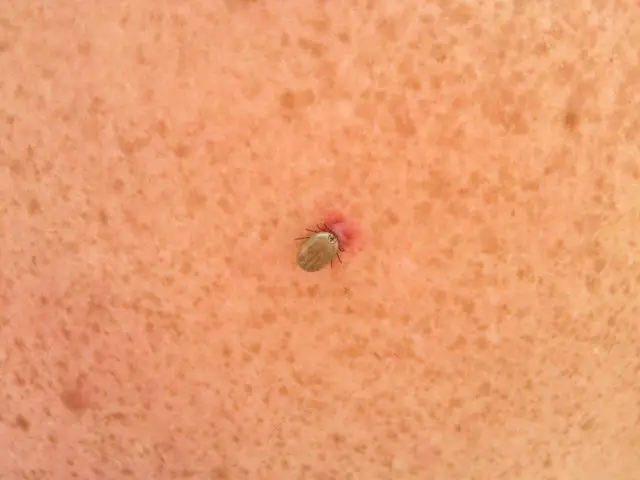
- Reading the “Engorgement” — A flat, unengorged tick has likely just attached (~0 hours). A slightly plump tick means ~24 hours. If it looks like a gray, swollen bean, it has been feeding for 72+ hours, and the risk of disease transmission skyrockets.
- Where They Actually Hide — Medical sites always say ticks prefer the armpits and groin. In my experience? They love ankles, calves, knees (both front and back), and the exact area where your underwear waistband sits.

The Permethrin Upgrade: Jim and I used to coat ourselves in DEET based products and wear long pants, yet we were still getting eaten alive. We finally switched to treating our outdoor clothes with Permethrin, and it has been an absolute night-and-day game changer! If you’re tired of getting bit, skip the DEET and look into Permethrin. (Here’s what I’ve learned about the differences.)
Tick Identification: Which Ones Are Dangerous?
Not every tick bite means you’re going to get sick. It is important to know which species you are dealing with.
1. Blacklegged Ticks (Deer Ticks) & Western Blacklegged Ticks
These are the primary culprits responsible for spreading Lyme Disease:
- In the Northeast, Mid-Atlantic, and North-Central states, it’s the Deer Tick.
- On the Pacific Coast, it’s the Western Tick.
BOTH of these types of ticks are notoriously small — especially in their younger stages!
2. Lone Star & Dog Ticks
Based on our property scouting, the vast majority of the ticks Jim and I (and our dogs, Destin and Tenor) have pulled off lately are Lone Star Ticks and American Dog Ticks.
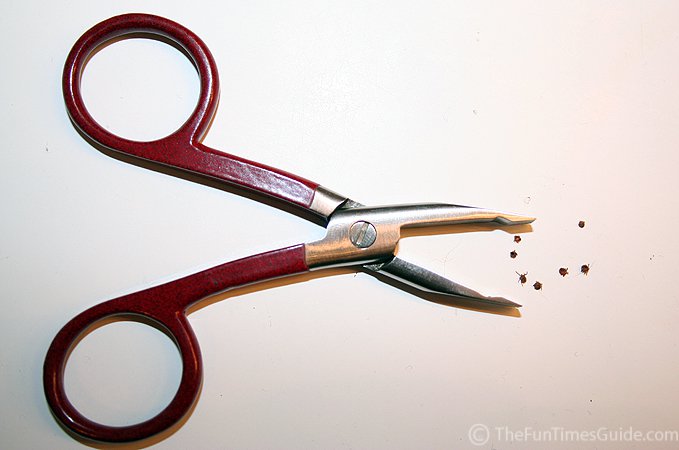
- The Tiny “Seed Ticks” — This summer, we ran into tick larvae and nymphs so tiny they looked like moving freckles. They leave behind the most intensely agonizing, long-lasting itch you can imagine. I scratched my legs to the point of bruising before I realized that a heavy application of Cortizone cream and regular Benadryl was the only way to shut the itching down.
- The Good News — Neither Lone Star nor Dog Ticks carry Lyme Disease. However, they can carry other nasty bacterial infections (like Rocky Mountain Spotted Fever — which our dog Destin was diagnosed with when we found him as a puppy). So you still need to take tick bites seriously and treat the symptoms accordingly.
How to Safely Remove a Tick (The Right Way)
Forget the old wives’ tales.
Don’t suffocate them with petroleum jelly. Don’t use nail polish remover. And NEVER hold a lit match to them.
Tossing a tick into “panic mode” makes them regurgitate their stomach contents back into your bloodstream — which is exactly how diseases are transmitted.
The Standard Tweezer Method
Here’s how to do it:
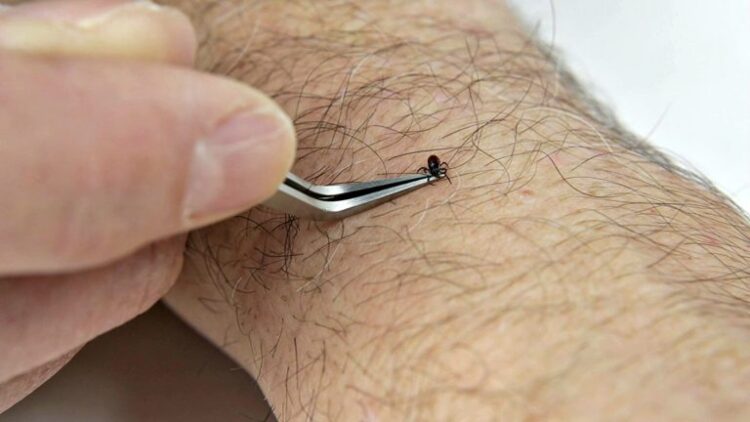
- Using fine-tipped tweezers, grasp the tick’s head as close to your skin as possible. (Be sure not to grab the swollen part of the tick’s body.)
- Pull straight upward with steady, even pressure. (Do not lessen your grip on those tweezers! You’ll want to let go as soon as you feel some resistance. That’s your skin being securely attached to the tick and it’s a little freaky the first time you do this. But hold TIGHT.)
- Do not twist or jerk — just keep pulling straight up until it finally comes out. (Twisting can break the mouthparts off the tick, leaving them embedded (like a splinter) in your skin.)
My All-Time Favorite Tool: TickEase
While standard tweezers will definitely work in a pinch, household tweezers are better designed for splinters. They’re often too wide and can easily crush an engorged tick or slice right through a tiny nymph.
I bought a dual-sided tool called TickEase for under $10, and it lives in my first aid kit now.
- The Human End — One end features incredibly fine, pointy tweezers that lie completely flat against the skin, allowing you to slip right under the body of even a microscopic seed tick.
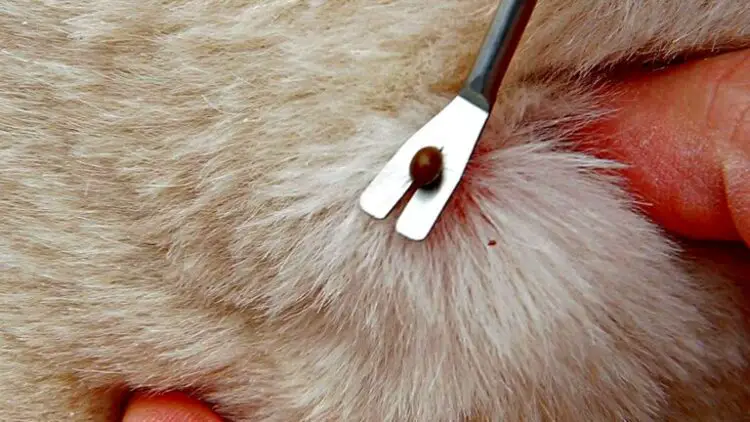
- The Pet End — The other end is a slotted “scoop” designed for your pets. You simply slide it flat against their skin, wedge it under the tick, and lift. It effortlessly holds your pet’s fur out of the way so you don’t accidentally pull their hair.
Living with Lyme: My Personal Experience
I mentioned earlier that my diagnosis came after a specific bite…
About 6 months before I started feeling sick, I had found a tick bite surrounded by a solid red rash roughly the size of a golf ball. I even took a photo of it — because it looked so unusual. (It’s in a tricky location, I’m not going to share it here. But I did eventually share it with my doctor.)
Since it didn’t look like the classic “bullseye” target you see on the news, I didn’t connect the dots. Six months later, the symptoms hit me pretty hard.
It turns out that a Deer Tick had flown under our radar, and by the time I was diagnosed, the bacteria had firmly set in. Living with Lyme Disease is a daily management process, and it completely changes how you view the outdoors.
My Golden Rules for Every Outdoor Trip Now:
- Check Early and Often — Do a thorough body and pet check the second you come inside.
- Save the Tick — If you pull an engorged tick off yourself or a family member, do not flush it. Drop it into a small plastic baggie or a pill bottle with a damp cotton ball. Write the date on it. If you develop a rash, joint pain, or flu-like symptoms weeks later, your doctor can have that exact tick tested to see exactly what bacteria you were exposed to.
Stay safe out there, protect your pups, and keep a reliable tick remover in your medicine cabinet!
By the way, I learned that you can also get Lyme Disease from your dog. Mine was obtained directly from a tick, not from my dog — but here’s how to tell if your dog has Lyme Disease from a tick bite.