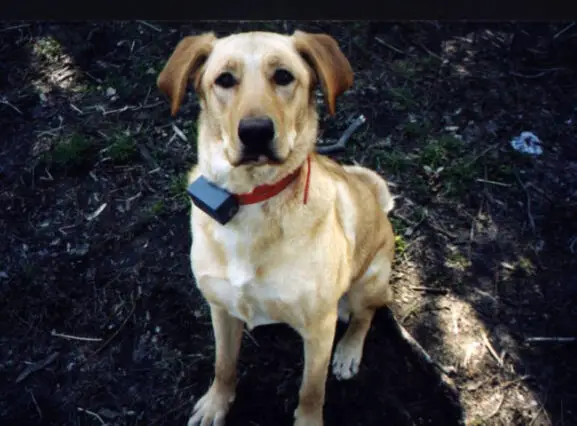
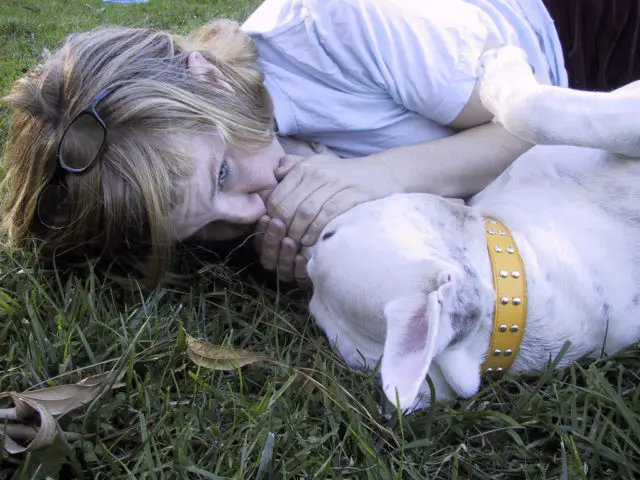
 Just like humans, our dogs can unexpectedly become injured or sick — causing them to stop breathing or go into complete cardiac arrest. Dog CPR could mean the difference between life and death for your dog.
I have been certified in CPR (Cardio Pulmonary Resuscitation) for many years. The same general principles used to rescue a person will work effectively on your dog as well.
While researching this topic, I was very surprised to find writers for a number of legitimate websites have apparently never taken a CPR course before. Their information was sadly incomplete and sometimes dangerously inaccurate as to the proper sequence required to perform CPR on an animal, or a human for that matter.
If you’re a dog owner, I would encourage you to learn how to perform dog CPR, so you will be prepared in the event of an emergency.
Here’s how to do pet CPR in an attempt to save your dog’s life…
Signs That Your Dog May Be Choking
First, you need to know the signs.
If your dog is doing one or more of the following things, then your dog could be choking on something:
- Is your dog pawing at his mouth?
- Is your dog coughing forcefully, constantly?
- Is your dog drooling or gagging?
- Is your dog wheezing, gasping for breath?
- Are your dog’s gums or lips turning blue or white?
- Is your dog vomiting?
- Is your dog whimpering as if in pain? Is your dog in obvious discomfort? Is he frantic?
When doing CPR on a dog, performing the proper steps in the proper order will ensure the best opportunity for good results…
How To Do Dog CPR In 3 Easy Steps:
#1 First, determine if the dog is breathing.
To find out if a dog is breathing, watch the rib cage and see if it goes up and down. Also find the pulse on your dog, which you can find behind the pad on their feet on the front foot or back foot. And feel the rib cage just behind the left elbow. If the heart is beating, you should be able to feel it there. Source
- If breath or respiration can be detected, then you can assume the that heart is functioning and chest compressions will not be necessary.
- If the dog is not breathing, you should clear the airway and give 2 good breaths through the dog’s nostrils with the dog’s mouth held closed.
#2 Check for a pulse. Another place to check for a pulse on a dog is in the groin area (the crease between the thigh and abdomen).
- If the dog has a pulse but is still not able to breathe on its own, continue to breathe for the dog, as described in the previous step — at a rate of 1 breath every 5 seconds.
- If no pulse is found, it’s time to start chest compressions. Lay the dog on its right side. The heart is located at about the front elbow in the chest. Place one hand under that part of the dog’s body, and your other hand on top. Compress 1 to 1-1/2 inches for a medium-sized dog, or as much as 2 to 3 inches for a large dog. Do this at a rate of 100 compressions per minute.
#3 If you’re alone in your CPR attempt to revive the dog, give one breath every 5 compressions until help arrives or the dog regains consciousness. Continue with dog CPR until you can no longer do it, or help has arrived.
Did You Know?…
Dogs only have a 4% chance of surviving a cardiac arrest. And that’s in the best of circumstances — like being at the veterinarian’s office where oxygen and drugs are immediately available. That’s why it’s imperative that you learn dog CPR if you have a dog.
You could be your dog’s only chance of survival!
Being aware of your dog’s current health issues and knowing how to properly treat them may help you avoid emergency situations that would require you to perform dog CPR in the first place.
Oh, and be sure to keep an eye on your dog at all times. Anything from chicken bones to rocks to toys could become lodged in your dog’s throat and block his airway, as evidenced in this video:
Truth is, there are many documented cases of mouth to snout resuscitation where a dog has successful
ly been brought back to life after having stopped breathing. It really works!
Are you prepared to save your dog’s life with pet CPR if you need to?
More About Dog CPR
- A Veterinarian’s Advice: How To Do Dog CPR
- PetTech: International Pet CPR Training Center
- Detailed Steps Involved In Dog CPR
- Pet First Aid iPhone Apps
- What PetTech Dog CPR Training Is Like
- Printable Brochure: How To Do Dog CPR
- How To Do Dog CPR With A Large Dog vs Small Dog
https://youtu.be/eO3X-hoqfB0
https://youtu.be/2YczN19dJZU