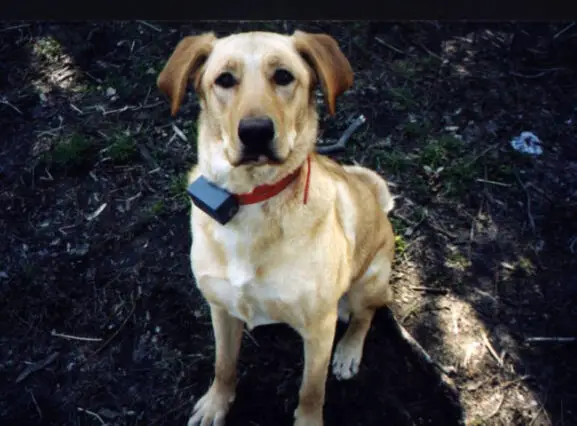
Jim and I are currently looking into installing an invisible dog fence. We’ve used a solid 6-foot wooden privacy fence for years, and I absolutely love being able to let the dogs out into the backyard unattended.
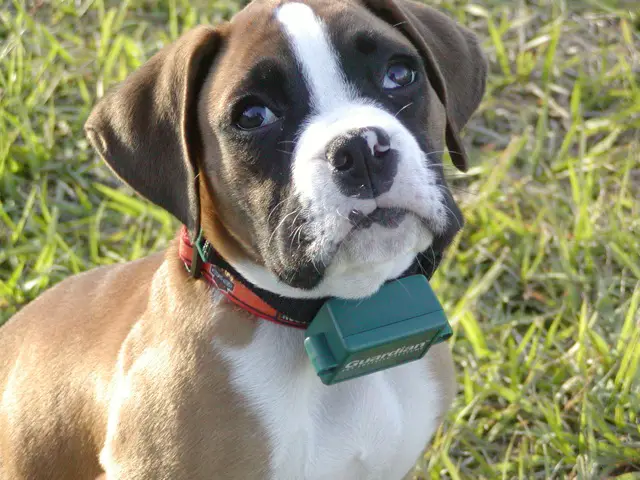
However, we are planning a move to a place on the lake. The last thing we want to do is block those gorgeous water views for ourselves or our neighbors. For that reason, a hidden fence seems like the perfect compromise.
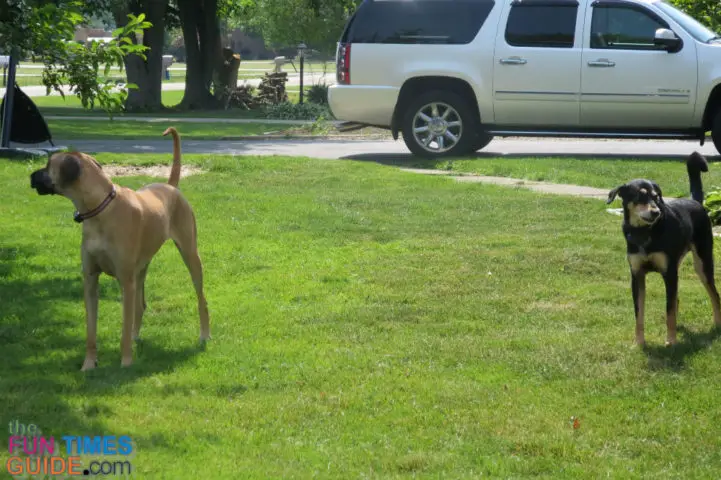
We’ve heard great things from dog owners who are currently using an invisible fence system — specifically, the owner of a Chocolate Lab, the owner of a Jack Russell Terrier, and the owner of a Great Dane.
Before making the leap though, I wanted to understand exactly how these systems work, what they cost, and the real-world downsides that the glossy brochures leave out. If you’re trying to decide if a fenceless boundary is right for your pack, here is the unfiltered breakdown of what I’ve learned.
How the Tech Actually Works
Whether you choose a traditional wired system or a modern wireless one, the underlying physics of pet containment relies on a 2-stage correction process.
The system uses a transmitter (usually mounted inside your garage or basement) to send a radio signal through a buried wire or an antenna. Your dog wears a specialized receiver collar that reacts to that signal zone.
- Stage 1 (The Warning) — As your dog approaches the edge of the yard, the collar emits an audible warning BEEP or VIBRATION. This gives them a heads-up that they are hitting the boundary.
- Stage 2 (The Correction) — If they keep pushing forward or attempt to cross the line, the collar delivers a mild static correction. It feels exactly like the static shock you get from touching a metal doorknob after walking across a carpet — it’s startling, but completely safe.
You can typically adjust the intensity of the sound / vibration / correction — so it won’t completely freak your dog out. And you can adjust it over time, as your dog gets more or less used to it.
The strength of the signal emitted by the wire can also be adjusted (underground) by the fence company. The stronger the signal, the farther away the dog must stay from the wire in order to avoid being corrected.
This is how your dog learns to stay within the designated area.
The Financial Breakdown: Hidden Fence vs. Traditional
There is no contest here: an invisible fence wins on price every single time.
To give you a real-world comparison, it cost us approximately $1,700 to have a 6-foot privacy fence professionally installed around our current 1/4-acre backyard (with 2 wide fence gates).
It would cost us around $900 to $1,000 to have a hidden fence professionally installed in that same area.
If you’re a weekend warrior and prefer to buy a DIY kit to bury the wire yourself, you can easily get it done for $200 to $300.
Compared to a traditional fence, you’ll save money with an invisible fence because it requires less upkeep and maintenance than vinyl and aluminum fences do.
An invisible fence is quicker and easier to install, as well.
The Hidden “Collar Tax”
While you save big bucks upfront, you do have to budget for the ongoing “collar tax.”
You have to replace the battery in the dog collar every 3 to 4 months — depending on how often your dog “tests” the hidden fence.
Without a fresh battery, your dog could freely escape the boundaries because the fence instantly “vanishes”.
Dogs are typically trained to stay about 8 feet from the boundary wire. When you notice that they start to get closer to the boundary, you’ll know it’s time to change the battery in the fence collar. They say that dogs can tell when the battery is getting low — at which point they may try to take advantage of the situation. So don’t put it off!
You can expect to spend roughly $60 to $90 a year on replacement batteries to keep the system active.
Here are some money-saving hacks for replacing fence collar batteries.
Pros: Why Hidden Fences Make Sense
- A Difficult to Fence Yard — For dog owners with yards that are difficult to fence (bordered by a Blue Line stream OR in a strict neighborhood with tight HOA rules against physical fences), an invisible fence is a safe, smart option.
- Preserves the View — You get total containment without turning your property into a closed-in box. Unlike a traditional fence, it won’t prevent you and your neighbors from enjoying the surrounding landscape or water views. That makes invisible fences ideal for lake lots, mountainous views, and wide open fields of acreage.
- Zero Yard Work Headaches — Speaking from experience… I’m so tired of having to use the weed-wacker on both sides of our privacy fence each time we mow. (It’s a real pain to have to keep re-painting it every 2 years to keep it looking nice too.) With a hidden fence, you just glide right over the boundary line with the lawn mower.
- Goes Anywhere — Try building a wooden fence through a rocky ravine, dense woods, or a steep hillside. It’s a nightmare. A buried wire can easily navigate water, thick brush, and crazy terrain.
- Massive Boundaries — These systems easily scale. A single transmitter can typically power a perimeter anywhere from a quarter-acre plot up to a massive 25-acre homestead.
- For Dogs of All Ages — An invisible fence can be used with puppies 8 weeks of age and older — as long as they know basic commands for the initial training period. (Toy breed dogs must weigh at least 2-1/2 pounds in order to manage the weight of the correction collar.)
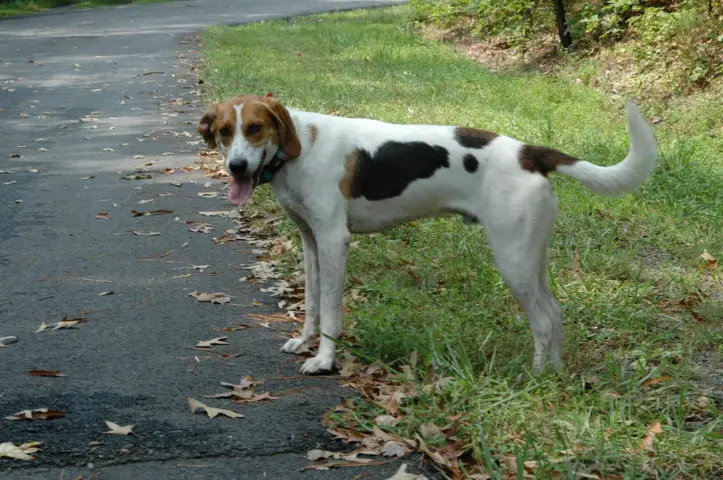
Most invisible fence systems are guaranteed to work with your dog. Therefore, even if you think you have a head-strong dog that cannot be contained within an invisible fence system, it may be worth trying — if they guarantee it!
QUESTION: I have a very bright dog, will he be able to outsmart the system?
~ InvisibleFence.com
ANSWER: No, he will probably be trained much faster than other dogs.
Cons: The Risks You Can’t Ignore
- It Doesn’t Keep the Outside Out — This is the biggest drawback. An invisible fence will keep your dog in the yard, but it won’t stop stray dogs, wild animals, or delivery drivers from walking right into your pup’s zone. Because of this, you still need to supervise your dogs while they’re outside.
- The Power Outage Vulnerability — If a severe summer storm knocks out your neighborhood’s electricity, your fence goes down with it. If you live in an area with an unreliable power grid, this is a major safety hazard.
- The Adrenaline Breach — If your dog has an incredibly high prey drive, a fleeting target like a deer or a neighborhood cat might cause them to break right through the static correction. The real danger happens after the adrenaline wears off: your dog will be terrified to cross back over the boundary to come home because they don’t want to get shocked again.

Dog trainer Pamela Dennison compares the fear many people have of wasps or bees to the feeling some dogs may experience after being shocked by an electric fence:
“Your dog goes through the fence line and gets zapped by a very painful electric shock as he notices the signal flags marking the property border. He makes the association between the intense pain and the signal flags. From now on, he will freak out at the sight of any kind of flag.”
Installing A Hidden Dog Fence
There are a few signs that will help you decide if it’s time to get an invisible dog fence. A few of these include “holes mysteriously appearing under your fence,” and the “dog not coming back to the house when called”.
More things to consider before installing an invisible fence:
- Before the invisible fence can be placed underground in your yard, power lines and underground pipes must be located and marked. As a result, you may have to postpone the installation of your invisible fence, based on how quickly the local utility company can come out and mark your property.
- The computerized controller unit for the invisible fence is typically installed in the garage or basement near an existing outlet. It takes up more wall space than I imagined, but most computerized units like this are highly reliable. They also prevent interference (and random shocks) from stray electrical fields.
- An “indoor” model of the invisible fence can be used inside your home (in lieu of baby gates) to keep pets out of certain rooms or off certain furniture. Typically it costs $120-$150 for the indoor unit. (Here’s how hidden fencing works indoors.)
- If you live near water, invisible fence systems can be placed such that your dog will be completely blocked from entering the water. Or, the company can lay wire in the water to allow your dog some room to swim. However, if you live in an area where there are tides, access to the water will probably need to be blocked altogether.
- You can use invisible fencing to block a dog’s access to places within your yard as well, like around a swimming pool, a garden or a tree.
- Some people use an invisible fence around the perimeter of a “traditional” privacy fence in order to keep dogs that like to dig or are habitual escape artists from getting out of the yard.
3 Rules For Training Your Dog To Respect The Line
You can’t just put the collar on and expect your dog to get it. True containment takes about 2 weeks of consistent, positive training.
Most invisible fence companies will help you train your dog to get used to the boundaries, over the course of about 2 weeks.
Of course, you will also be training your dog alone at times — while offering loads of praise any time your dog respects his new boundaries. As with any form of dog training, ensure that you do everything in your power to prevent your dog from failing at this training exercise.
You can still walk your dog outside the boundaries of your yard, so long as they do not have the invisible fence collar on at the time. (The collar should be removed every time you leave your yard to walk your dog OR go for a ride in the car.)
Rule #1 – Establish Strict “Walk” vs. “Yard” Boundaries
Your dog needs to know when it is safe to leave the property. Never walk your dog across the boundary line while they are wearing their hidden-fence collar. Take the receiver collar completely off, clip on their regular walking leash, and use a distinct release command like “Let’s go!” so they know they have permission to cross the line with you.
Rule #2 – Use Visual Flags First
Dogs can’t see radio waves. When you first set up the system, place bright white boundary flags along the perimeter. This gives your dog a clear visual map of where their safe zone ends while they are learning the audio cues.
Rule #3 – Rotate The Collar
Never leave the heavy receiver collar on your dog 24/7. The plastic contact points can cause serious skin irritation or sores if left rubbing against the neck indefinitely. Take it off every single night to give their skin a break, and if you have a thick-coated breed, keep a small patch of their neck fur trimmed so the static contact remains consistent.
If You Move Or Travel With Your Dog…
You can usually take your invisible fence system with you if you move to a new location.
If the previous owners of your new home left an invisible fence behind, you can have a company rep come out an check its effectiveness. Most likely, you’ll be able to use the existing invisible fencing as is — you’ll just need to purchase a collar for your dog.
And if your dog happens to pass away, the same collar can be used with a new dog.
Some indoor hidden fence systems are portable, allowing you to take it with you when you travel.
What About That Special Dog Collar?
Here are some notes I’ve saved about the dog collar and batteries used for invisible fences:
- After months (or years) of using the invisible fence, some people take the collar off their dog permanently — though it’s not recommended. Some super-chill dogs learn the boundaries and learn to respect the invisible fence barrier. It all depends on the personality and behavior of your dog.
- It’s recommended that you remove the collar every night during the first month and at least once a week from then on. This prevents rashes and irritation from prolonged use.
- Some dogs with very thick coats need to get a small patch of fur around their necks trimmed on a regular basis — in order for the collar correction to work.
- If you have more than one dog, you can get more than one collar for use with the same invisible fence. However, the dogs may feel the correction at different intensities — especially if one is a large dog and the other small, or one has long hair and the other short.