Do you have a fearful or nervous dog?
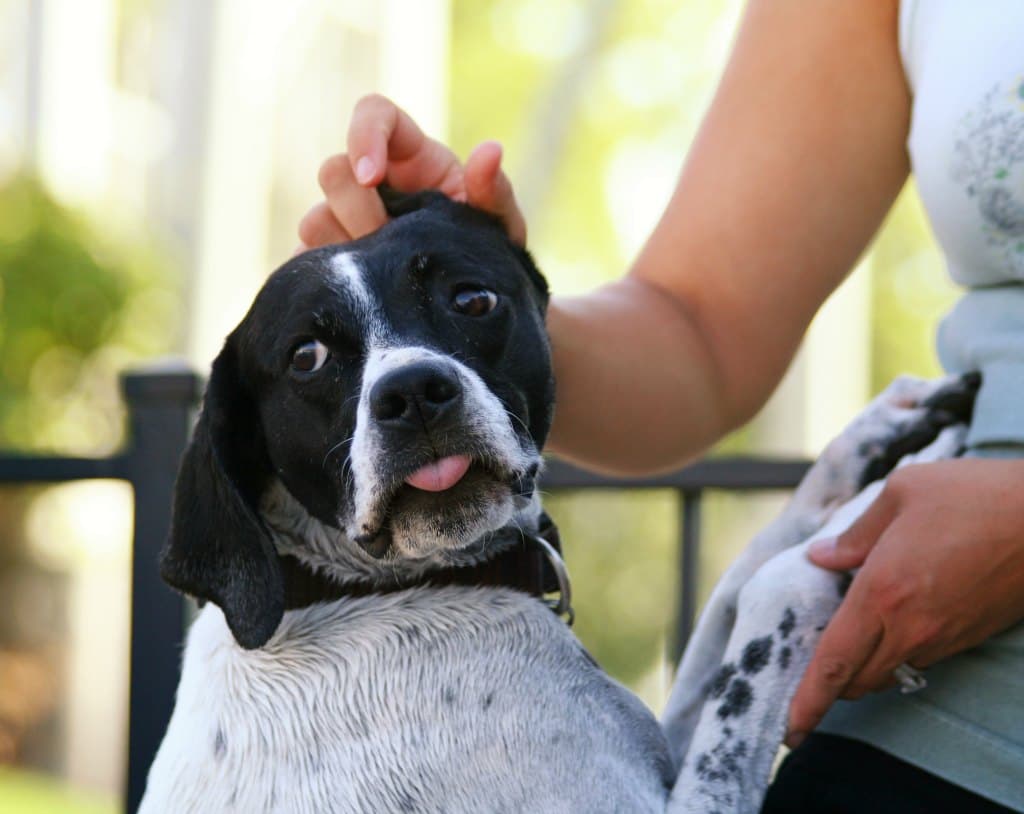
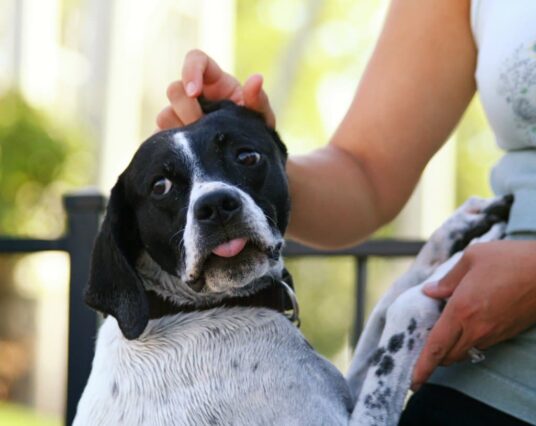
The following reader’s question is in reference to this earlier post about nervous dogs inside the home — dogs that bark like crazy whenever strangers come to the door or enter the house.
What can you do if you are out in public? My dog is very nervous around anyone, and will not turn his back on anyone. We have tried having the stranger give him treats but that doesn’t work and he won’t let anyone touch him either.
— Pat
Dear Pat –
As a dog trainer, I have 2 great tips that will work for you!
Having the stranger give your dog treats is a good idea. But before that, some other things also need to be looked at.
A nervous dog often times is a very sensitive dog — which means that he picks up all of your thoughts, feelings, and emotions as well as anyone around him.
So, the first thing you will want to do is be calm and confident whenever you go in public with your dog.
Look at it this way…
You know how to be around other people out there in the world. It’s up to you to guide your dog through that experience. He needs to learn from you how to be!
Here’s how I teach people to make their nervous dogs more comfortable around strangers in public…
Your Dog Learns From Watching You
You can get your dog more comfortable around strangers in public by working with your dog through his nervousness in these 2 ways:
- Using slight corrections
- Inserting confidence
What has to come through the leash — from you to your dog — is total confidence and calmness at all times throughout this exercise.
If you start feeling nervous, frustrated, or sorry for your dog, then you will not be able to create a change in your dog’s behavior.
All those “emotions” will cause to your dog to feel insecure and more nervous — because you are his role model and guide, and he senses when you’re experiencing discomfort. When you are stressed, he sees it as his job to decide how to get through it!
So because of his nervousness already in place, your dog will decide to avoid any contact and go into defense mode around strangers. At this time, he has no idea how to handle this type of situation, and it is quite overwhelming for him.
Here are 2 common scenarios with nervous dogs, and how to resolve them…
#1 – If your dog won’t turn his back toward people…

If your dog won’t turn his back toward people, most likely it’s because he is looking out for you.
So, you have to assure him that you’ve got the situation under control.
Literally tell your dog: “I’m in control here, I got this, you can relax, I’m aware of all these strangers and I’m fine with them, they are part of our pack.”
It’s best if you practice this training situation with a friend — and take your time. Try this:
- Have your friend stand facing you.
- Tell your dog that you are in control and you’ve got the situation handled. Most likely he is nervous right now, so do not pet him for comfort. Instead, give slight tugs on the leash for correction (not harsh, just enough for your dog to know you are correcting him and in control).
- Every time your dog looks at you, tell him to relax and that you “got it.” But also, do not focus all your attention on him — that might be too much for your nervous dog. He simply wants (and needs) a way to relieve the pressure he feels in these stressful situations. Saying, “I’ve got this” with confidence shows him that all the pressure is on your shoulders and not his.
- Make sure that you interact with the person in front of you.
- Tell the person to not look at your dog — but to be relaxed and just interact with you. It’s imperative that this person does not try to make contact with your dog. So here you have to be willing to “protect” your dog from what he sees as an intrusion to his personal space.
- Once you perceive that your dog is starting to relax, then begin to physically turn him away from the person. Stay calm and be firm in what you are doing — not hash, just firm. If you start feeling frustrated or in any way unsettled, please stop and start again another time.
The most important part about all of this is that you keep a light and easy conversation with the “stranger” — rather than focusing too hard on your dog.
And if your dog tries to turn around to face the person, just turn him back again and again — until he relaxes with his back to the stranger.
Depending on how fast you’re getting a result, you can go on from here. But if this exercise was not easy for your dog, then please end the session here and try again the next day (or whenever you choose).
Just be sure to give your dog some time to process this new way of being around “strangers” several times with your assistance — before expecting him to do it naturally on his own.
You want to end each session with your dog being relaxed and facing away from the stranger.
Once your dog has accomplished that with ease, then you could go on further — but make sure you are not asking too much of your dog the very first time you try these tips.
Baby steps work best when training your dog.
#2 – If your dog won’t sit in close proximity to strangers…
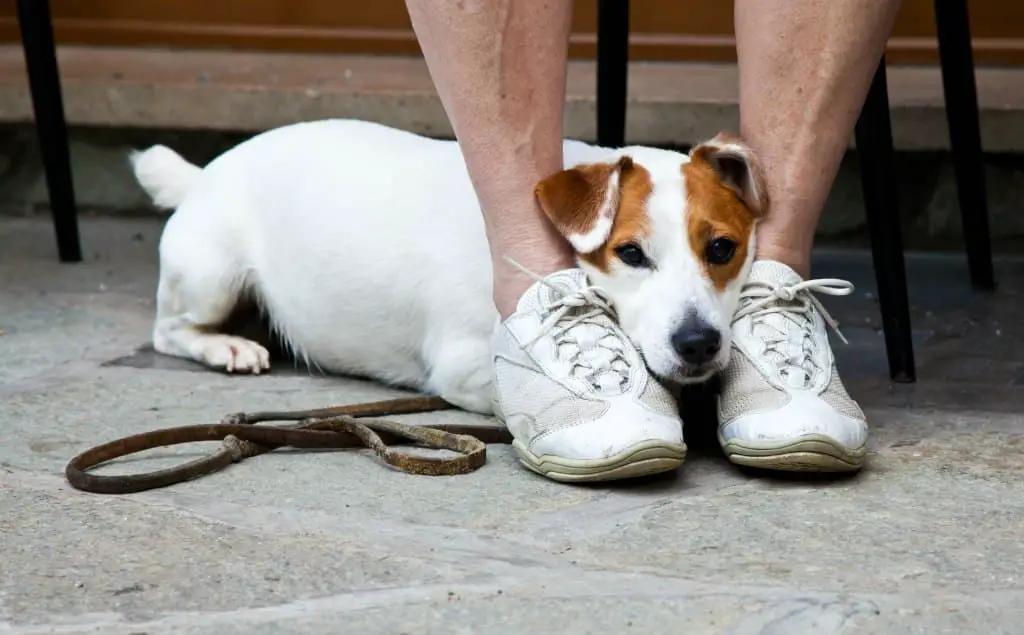
The next step would be to have your friend sit next to you — with your dog relaxing and laying next to you.
Position yourself so that you are between the other person and your dog, and your dog’s back is facing the “stranger.”
If that is working with ease, have the person sit on the other side of your dog — with the dog facing his back to the stranger.
Make sure that all of your dog’s nervous behavior gets corrected, with gentle tugging on the leash and verbal assurance that you’ve got this one under control.
It is important that the other person does not reach for your dog, stare at him, or talk to him throughout this entire exercise. The goal is to get your dog to experience relaxation while facing away from what he has decided is dangerous.
Please don’t feel pressured to create a certain result during these sessions. Let your dog determine how much is enough for each session.
And remember, training sessions should always end on a good note and having accomplished something. Even if it’s the smallest change, congratulate yourself and your dog… because a fearful dog’s journey isn’t a straight line!
Still Got A Nervous Dog In Public?
Are you willing to give your dog some time with this? Would you also be willing for him to never be totally outgoing towards another person?
It helps if you don’t have an agenda, but would simply be willing to just have a less nervous dog. That’s enough.
Without that pressure on you and him, so much more can show up in both of your lives.
Your dog needs to know that:
- You are on his side.
- You will protect him from people who are invading his space.
- You will not allow anyone to touch him unless he is the one inviting the physical contact.
And please show your affection towards your dog with petting only during times when he is relaxed. If your dog is nervous, do this instead… rest your hand on his neck and let your calm energy transfer into his body.
The more you gain your dog’s trust, the easier it will be for him to come out into the world and discover that the people around him are not out to get him.
You will know when it’s time to introduce the treats given by strangers again. And this time you will have a better result — given that your dog has drained a lot of his insecurity with the training exercises you’ve done!
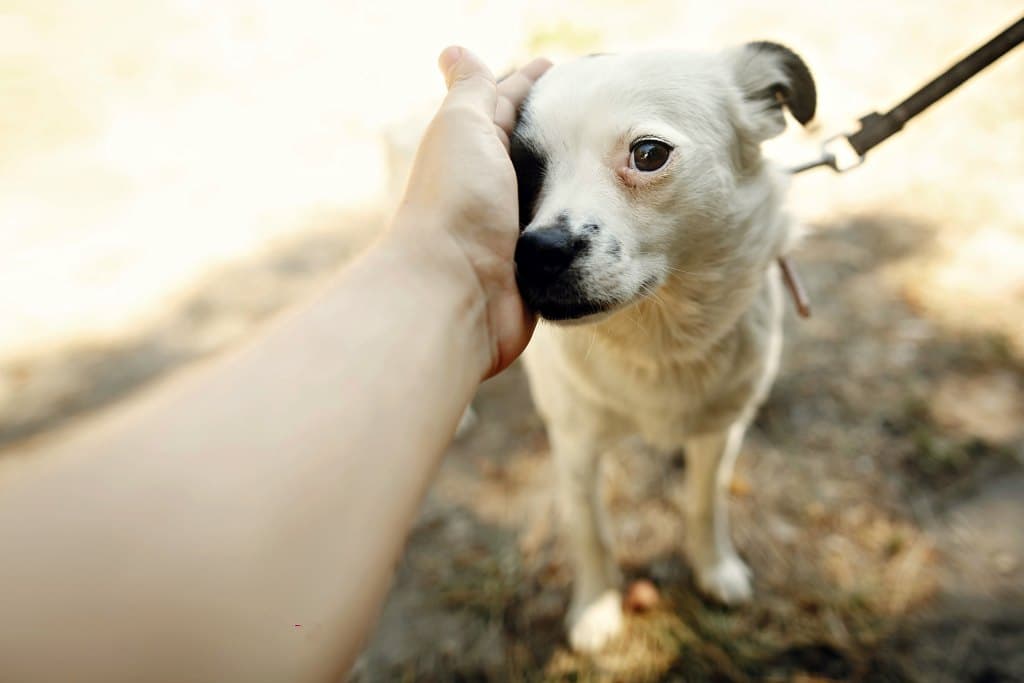
P.E.T. (Play, Exercise, Training) Helps A Nervous Dog Become More Confident
When you have a nervous dog, the first thing you want to do is learn how to lower your dog’s stress level.
Lowering your dog’s stress level will give your dog the chance to learn new skills and behaviors.
One way to help a nervous dog become a more confident dog is by doing Play, Exercise, Training therapy (otherwise known as P.E.T.):
- Play – If your dog is afraid to play (with or without you), try to change your dog’s surroundings to make him more comfortable. Give him a place to play where he definitely feels safe. Play there all the time until he is finally 100% confident playing. Then, move the play behavior to another location and try to get your dog comfortable playing there as well. Find out what really makes your dog tick when it comes to playing. For some dogs, it’s rough-housing. For other dogs, it’s trying to find a bone or treats that you’ve hidden from them. But don’t move to another play area until your dog is completely comfortable with the first location.
- Exercise – All forms of exercise can help a nervous dog cope with stress. Exercise gives your dog freedom to simply be a dog. (It’s also beneficial to your dog’s health!) Dog exercise usually takes place in the form of active play — with you involved. Try to give your dog a good amount of exercise each and every day. This will build his confidence level.
- Training – By training your dog, you are building up his confidence and helping him remain stress free. Training a fearful dog (which includes everything from simple daily tasks to advanced dog tricks), gives the dog a reason to feel good about himself. He starts to realize that he has a purpose.
The Bottom Line
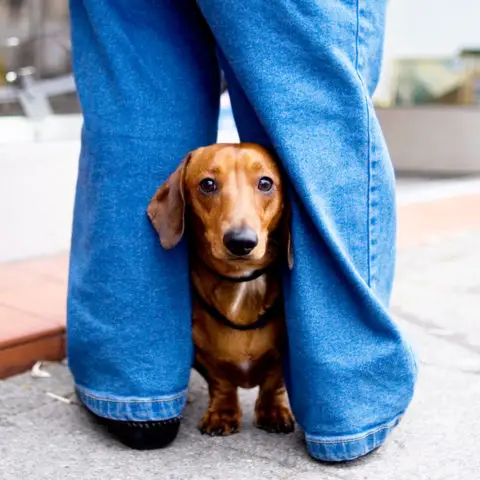
If your dog is nervous around strangers in public, remember that your dog takes cues from you.
How you are feeling and behaving is very obvious to your dog. He can pick up on your emotions quicker than you may realize your own personal feelings! So, keep your emotions in check if you want to help your nervous dog be more comfortable around strangers.
Like this post? Save it to read again later… or share with others on Pinterest!
Need some training advice for your own dog? I would be happy to help you solve dog training and behavior issues over the phone — just like I was able to help Jim and Lynnette with their dog who used to be anxious and nervous around people.

I travel worldwide to help facilitate the communication process between people and animals through workshops, courses, private consultation, and a popular radio show called Conversations With Dog.